
Tattoos Ideas We’ve all made impulsive choices, and sometimes those choices end up permanently inked on our bodies. Maybe it’s a faded ex’s name, a blurry zodiac sign, or that tribal band you got at eighteen. Living with a tattoo you dislike can feel embarrassing, but laser removal is expensive and painful. Fortunately, cover up tattoos offer a creative, often beautiful second chance. A skilled artist can bury old ink beneath layers of fresh design, turning your biggest regret into a stunning conversation piece. The following 27 ideas range from dark and dramatic to soft and artistic. Each one is chosen specifically for its ability to hide unwanted lines, letters, or shapes while delivering a brand new work of art you’ll be proud to wear every day.
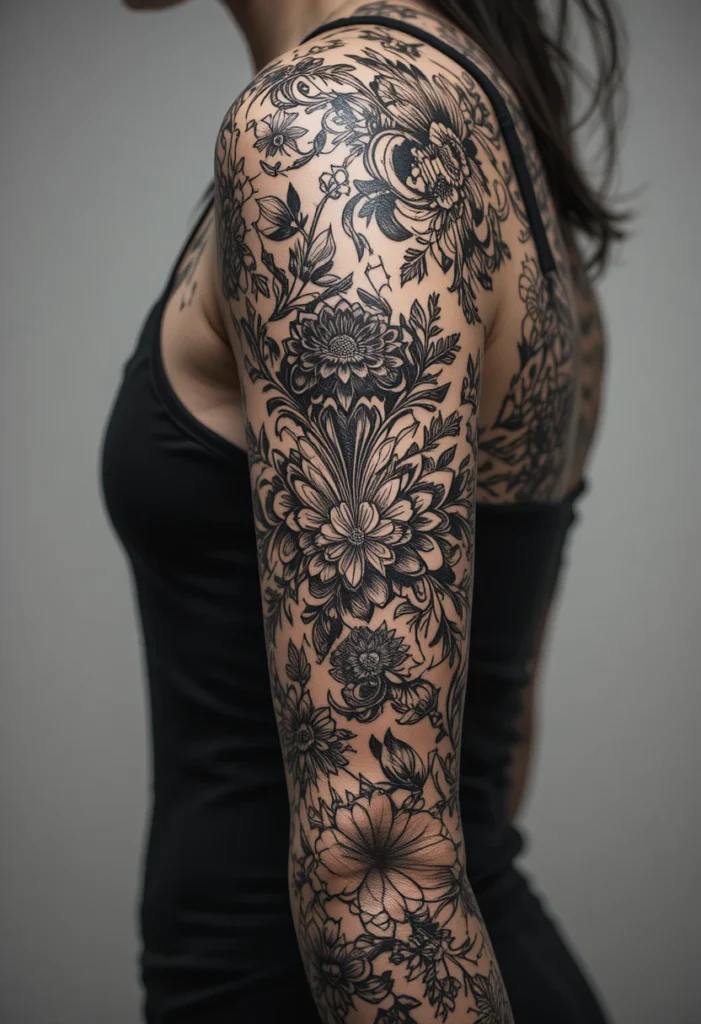
1. Dense Blackwork Florals
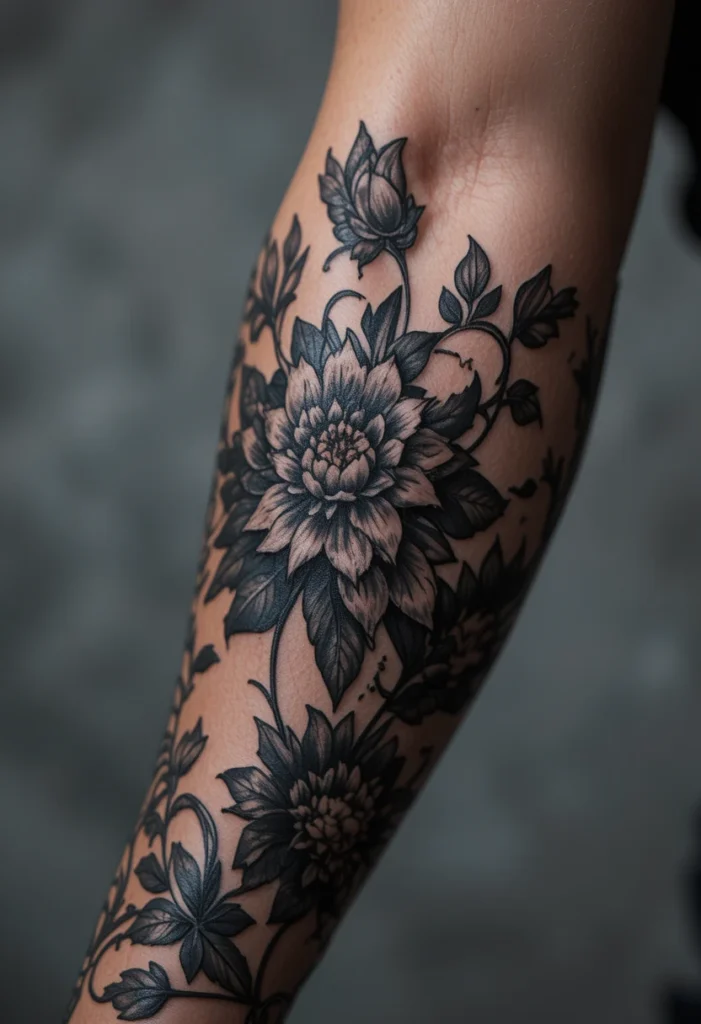
Roses, lotuses, and peonies have long been favorites for cover ups because their layered petals and deep shadows naturally camouflage old lines. A talented artist can place the darkest part of the flower directly over the unwanted tattoo, using the natural curves of the petals to break up the original shape. Dense blackwork goes a step further by relying on solid, saturated black ink rather than color, which is excellent for hiding thick lettering or heavy tribal work.
The finished piece looks like an intentional botanical illustration—edgy, elegant, and completely fresh. You can add subtle negative space highlights to keep the flower from feeling too heavy, but the overall effect remains dramatic and cohesive. This approach works particularly well on shoulders, forearms, and calves, where the skin has enough flat surface to support large, flowing forms. The old ink simply becomes part of the flower’s shadow.
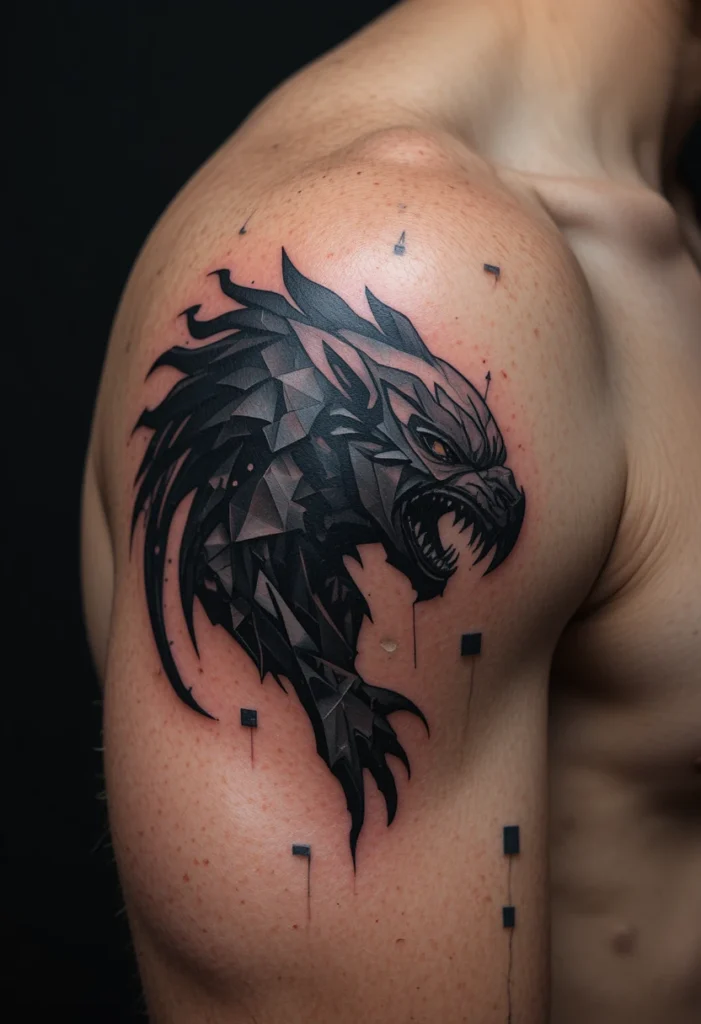
2. Geometric Animal Silhouettes
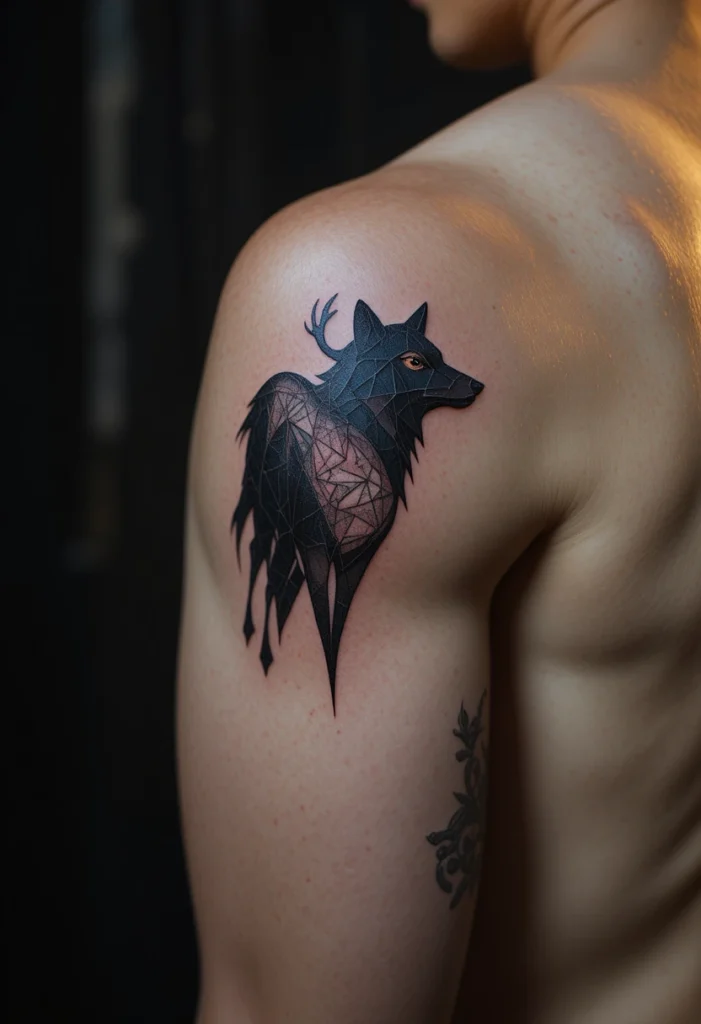
Animals such as wolves, bears, or eagles can be reimagined as geometric mosaics that just happen to land exactly over your old tattoo. Instead of a realistic portrait, the design uses sharp triangles, hexagons, and angular lines to build the creature’s shape. Those same angles and solid fill segments provide perfect hiding spots for stray lines or faded script. The human eye first reads the overall silhouette—a panther ready to pounce or an owl in mid-flight—and only later notices the intricate facets.
This style turns a cover up into a conversation piece, blending nature with modern abstract art. Because geometry relies on precision, choose an artist who specializes in dotwork or mandala tattoos. They know exactly how to align each segment so the old ink disappears without visible trace. The result feels intentional, bold, and completely unlike anyone else’s tattoo. Your mistake becomes a powerful, angular creature.
3. Japanese-Style Wind Bars and Waves
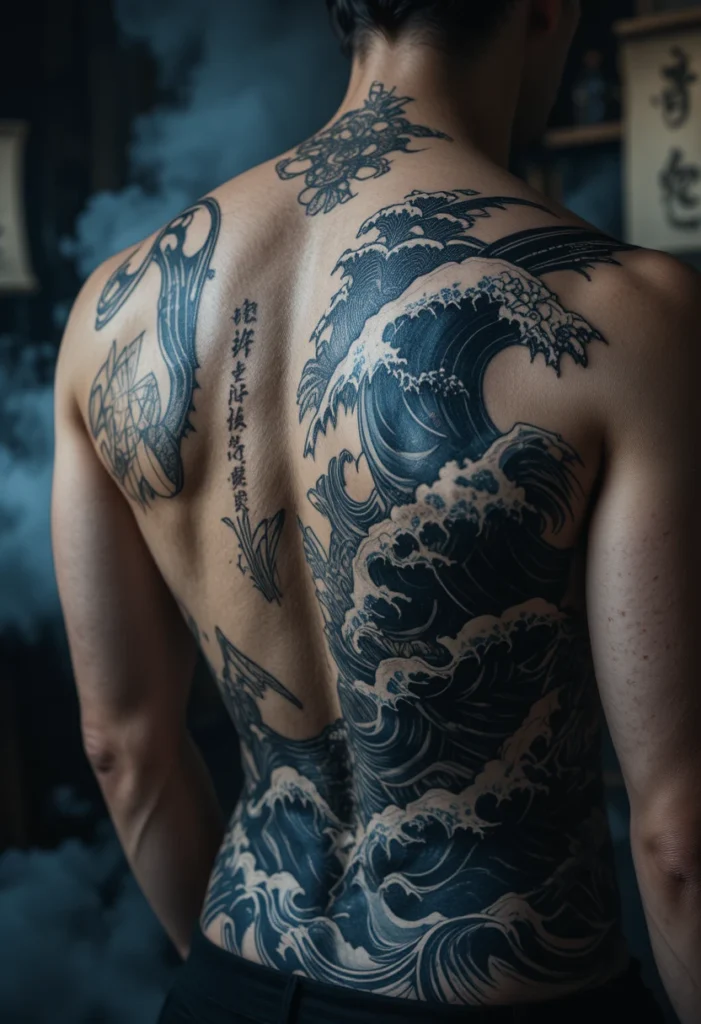
Traditional Japanese tattooing has mastered the art of background fillers like wind bars, rolling waves, and cloud formations. These flowing elements are naturally chaotic yet structured, making them ideal for swallowing up irregular or patchy old tattoos. An artist can design a wave that crashes directly over a dated heart or name, with the white foam and deep navy curls working together to distract and conceal. The movement of the water draws the eye across the skin, so no single spot feels suspicious.
You can then add a koi fish, dragon, or cherry blossom later as the main subject, or leave the background as a standalone abstract sleeve. The key is to use bold, saturated color—deep blues, rich reds, and bright yellows—because pale washes won’t hide the original ink. When done well, no one will ever guess there was something underneath. It just looks like a classic, powerful Japanese backdrop that commands respect.
4. Neo-Traditional Skulls with Ornamental Details
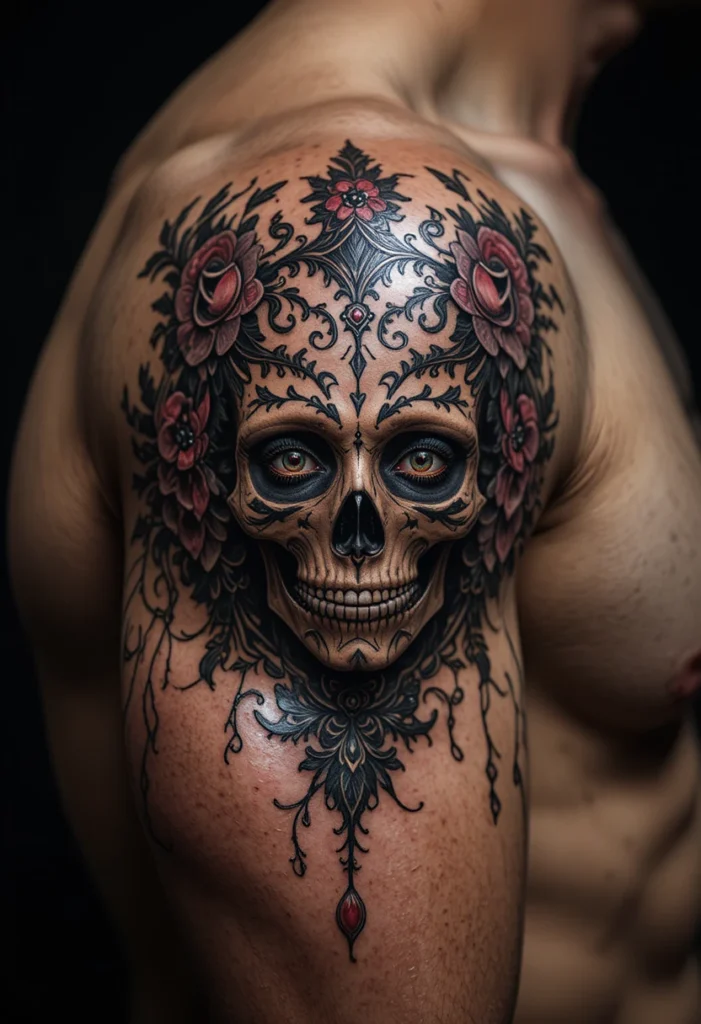
Skulls might seem dark, but neo-traditional skulls bring a surprisingly artistic and elegant solution for cover ups. The hollow eye sockets, nasal cavity, and intricate cracks can be positioned directly over problematic areas like old lettering or small symbols. Ornamental filigree—swirls, dots, and delicate lines—wraps around the bone structure, creating additional layers of camouflage. The key advantage of a skull is its asymmetrical nature; no two sides match perfectly, which gives the artist freedom to adjust the design in real time.
You can add roses, daggers, or gemstones to further distract the eye. Because the style relies on bold outlines and varied line weights, the old tattoo gets broken apart into smaller, unrecognizable fragments. The final piece looks like a moody, romantic work of art rather than a cover up. This works beautifully on upper arms, chest panels, or even shins where the bone shape mimics the skull’s own curves. Death never looked so good.
5. Cosmic Galaxy Scenes with Nebula Swirls
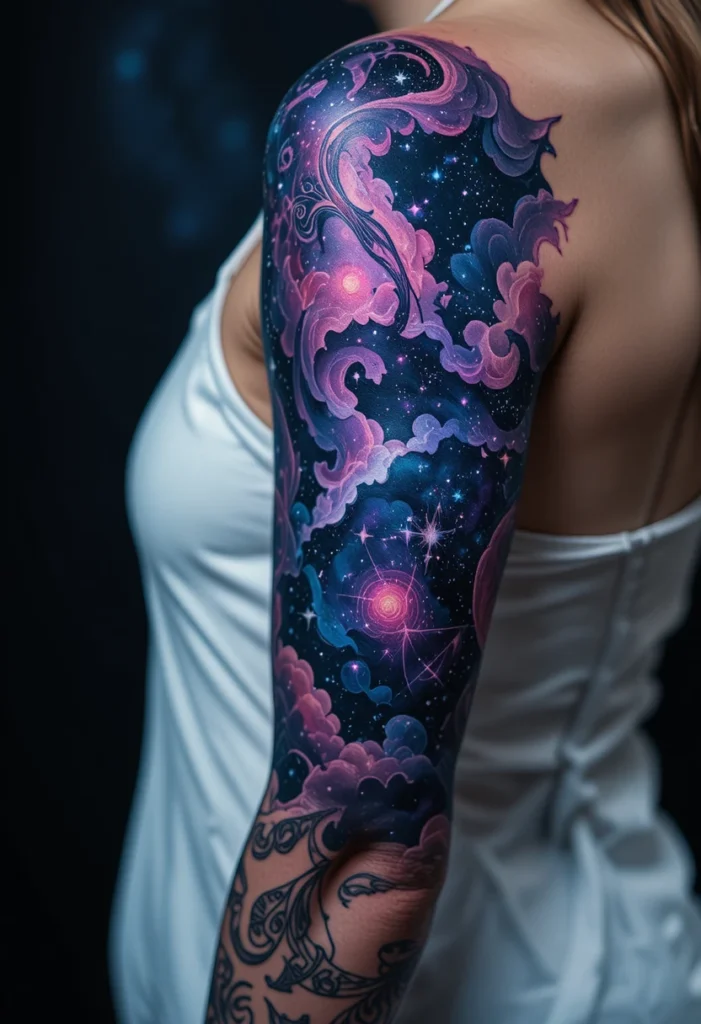
A galaxy tattoo offers endless opportunities to hide unwanted ink because the design has no fixed boundaries. Deep purples, blues, and magentas blend into black voids, while white starbursts and tiny constellations scatter across the skin. Your artist can place the densest part of the nebula—where colors are darkest—exactly over the old tattoo. The organic, flowing nature of cosmic clouds means there are no hard edges to betray the original lines.
You might add planets, shooting stars, or a crescent moon for extra visual interest. Because galaxy tattoos rely on color saturation and smooth gradients, they work best on larger areas like forearms, thighs, or backs. The process often requires multiple sessions to build up the right depth, but the result is a mesmerizing piece that looks like a window into outer space. No one will ever guess that a faded name or tribal sun lives beneath those swirling stars.
6. Heavy Blackwork Mandalas with Radial Symmetry
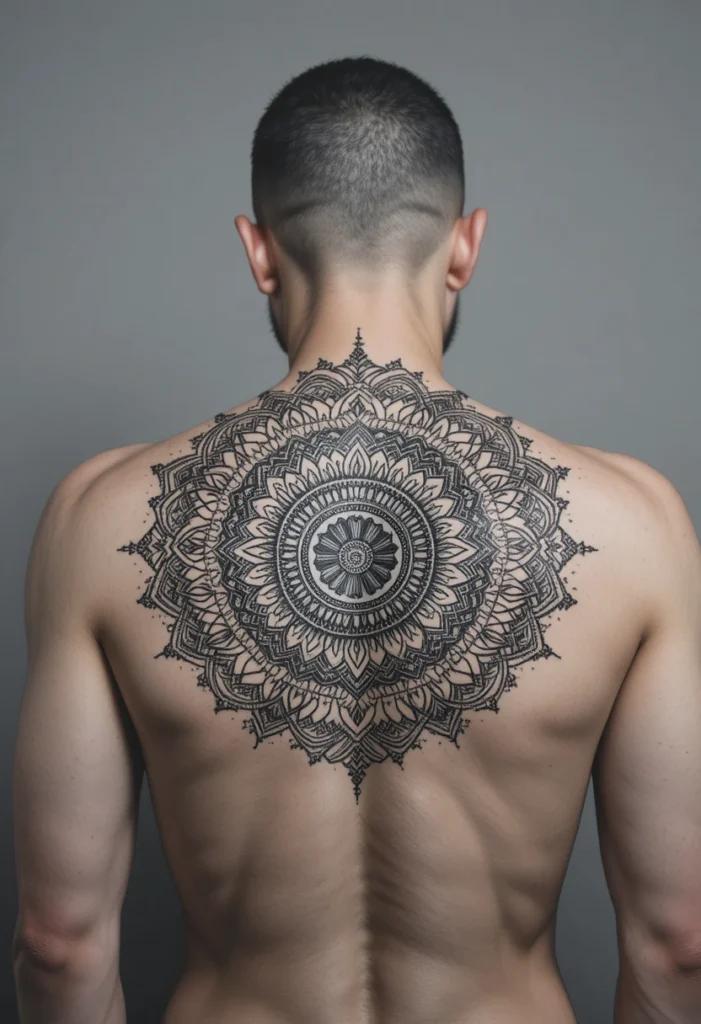
Mandala tattoos are famous for their radial symmetry and repetitive patterns, which make them exceptional cover up tools. Each layer of petals, dots, and geometric shapes draws the eye toward the center, away from any imperfections underneath. By using thick, solid black ink in the innermost rings, an artist can completely obliterate small to medium-sized tattoos. The outer rings gradually thin out into delicate linework, creating a beautiful contrast that feels intentional and spiritual.
You can scale a mandala to fit almost any body part—from the back of the neck to the entire knee cap. The trick is to avoid overly thin lines near the old tattoo; instead, demand heavy saturation in the core. This style also ages wonderfully because bold black holds its shape for decades. Whether you choose a traditional lotus-based mandala or a more modern abstract version, the symmetry guarantees that the original ink becomes invisible architecture within a larger sacred design.
7. Neo-Japanese Hannya Masks with Flowing Ribbons
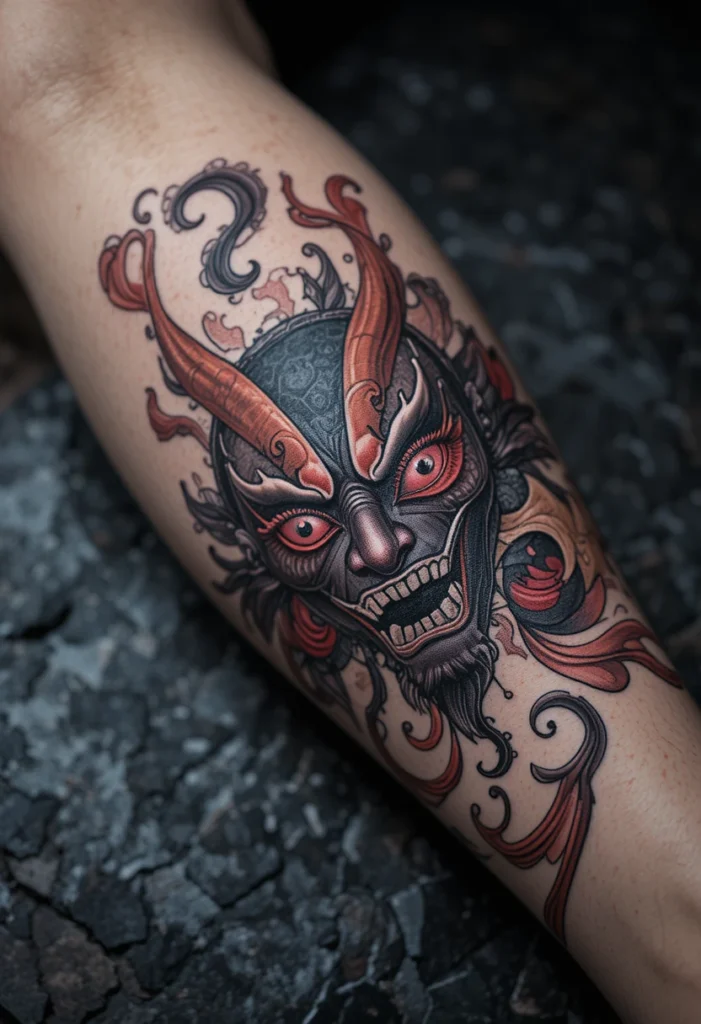
The Hannya mask from Japanese folklore represents a jealous female demon, and its dramatic features—horns, snarling mouth, and wild eyes—provide perfect camouflage for old tattoos. An artist can place the deep shadows of the eye sockets over lettering, while the curved horns sweep across faded roses or stars. Flowing silk ribbons, another classic element in Japanese tattooing, weave around the mask and across the skin, adding extra layers of coverage.
These ribbons can be colored in vibrant reds or golds to further distract and beautify. Because the mask is asymmetrical and highly detailed, the viewer’s brain focuses on the emotional intensity of the face rather than searching for old ink underneath. This design works exceptionally well on forearms, calves, or shoulder blades. Pair it with peonies or crashing waves for a full sleeve or standalone piece that commands attention and tells a story of transformation.
8. Abstract Splatter and Watercolor Blooms
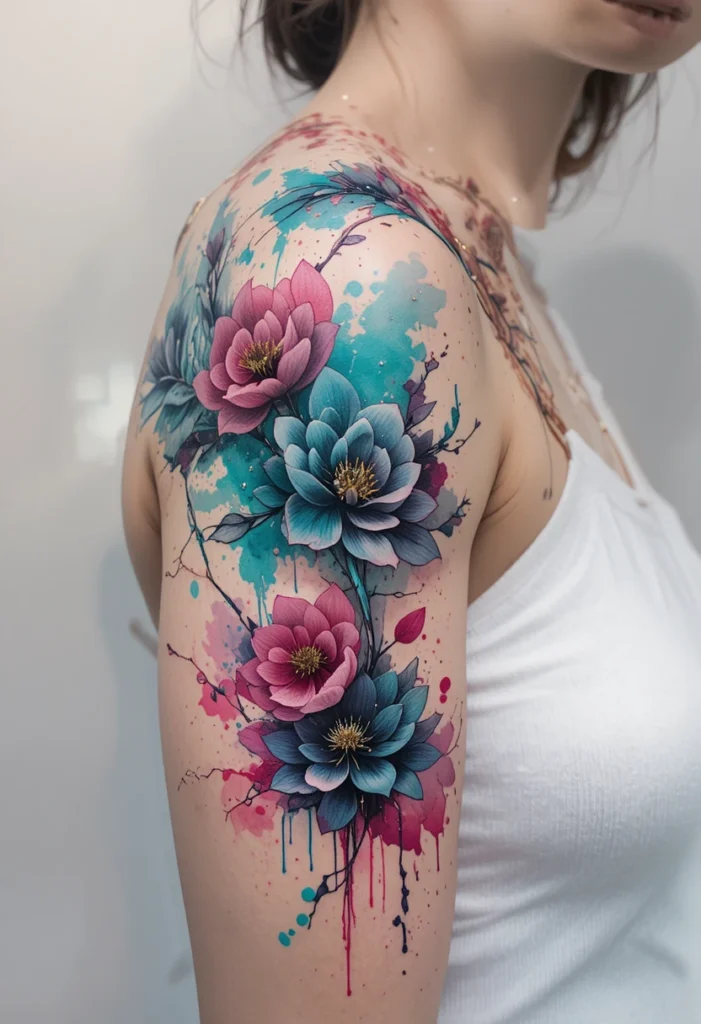
If you love modern art, abstract watercolor tattoos offer a freeing approach to cover ups. Instead of hiding the old tattoo with solid shapes, the design embraces chaos—colorful splashes, drips, and soft blooms that bleed organically across the skin. Your artist will use bold, concentrated pools of pigment directly over the unwanted ink, then feather the edges into lighter washes. The original tattoo becomes just another texture within the abstract composition.
You can add black ink splatters or fine liner outlines to give structure, but the overall feel remains painterly and free. This style works best on flat, larger areas like thighs, ribs, or upper arms. It’s important to find an artist who specializes in watercolor because the technique requires knowing exactly how much saturation is needed to block out the old work without turning muddy. The final result is unique, artistic, and impossible to replicate—just like your story.
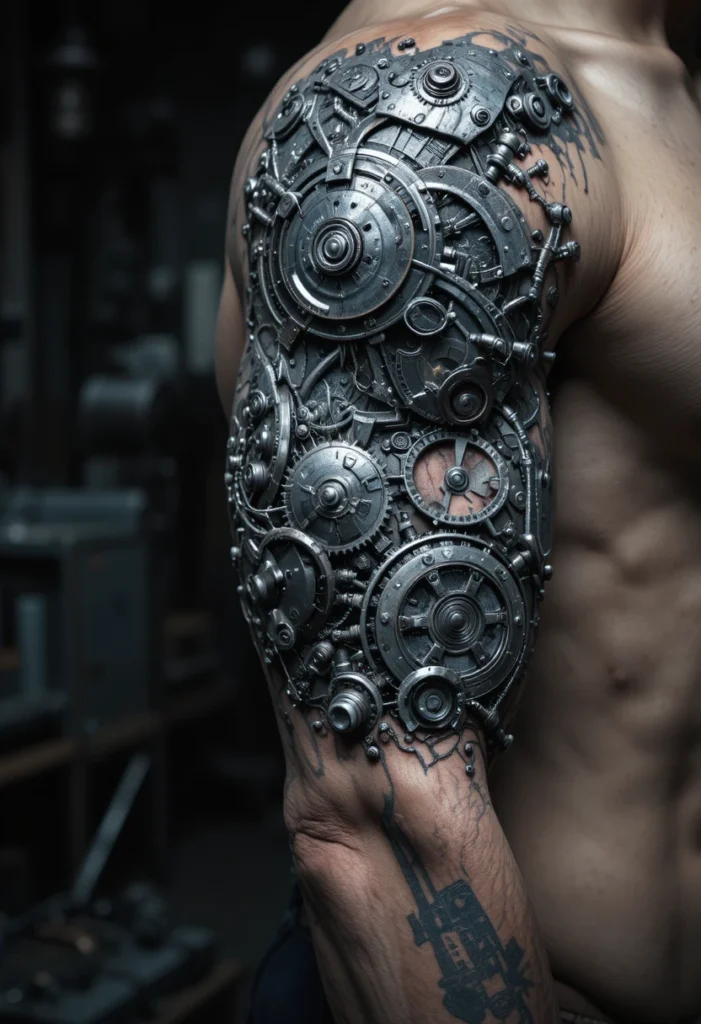
9. Biomechanical Metal Plates and Wires
Biomechanical tattoos turn your skin into a sci-fi landscape of exposed gears, metal plates, and hydraulic wires. This style is legendary for cover ups because the design naturally includes dark, recessed areas that look like deep shadows within machinery. An artist can position a heavy black metal plate directly over your old tattoo, then connect it to pistons, rivets, and torn flesh effects. The illusion of skin peeling back to reveal robotic parts gives plenty of room to hide unwanted lines in the “under-layer.”
Because biomech relies on realistic shading and contrast, even thick blackwork can disappear into a well-rendered gear system. This concept shines on biceps, forearms, or calves where the natural muscle contours enhance the mechanical illusion. Choose an artist experienced in realism or sci-fi art, as the success depends on convincing highlights and shadows. When done right, people will ask about the robot under your skin—not the ex’s name you needed to lose.
10. Chicano-Style Script with Ornate Flourishes
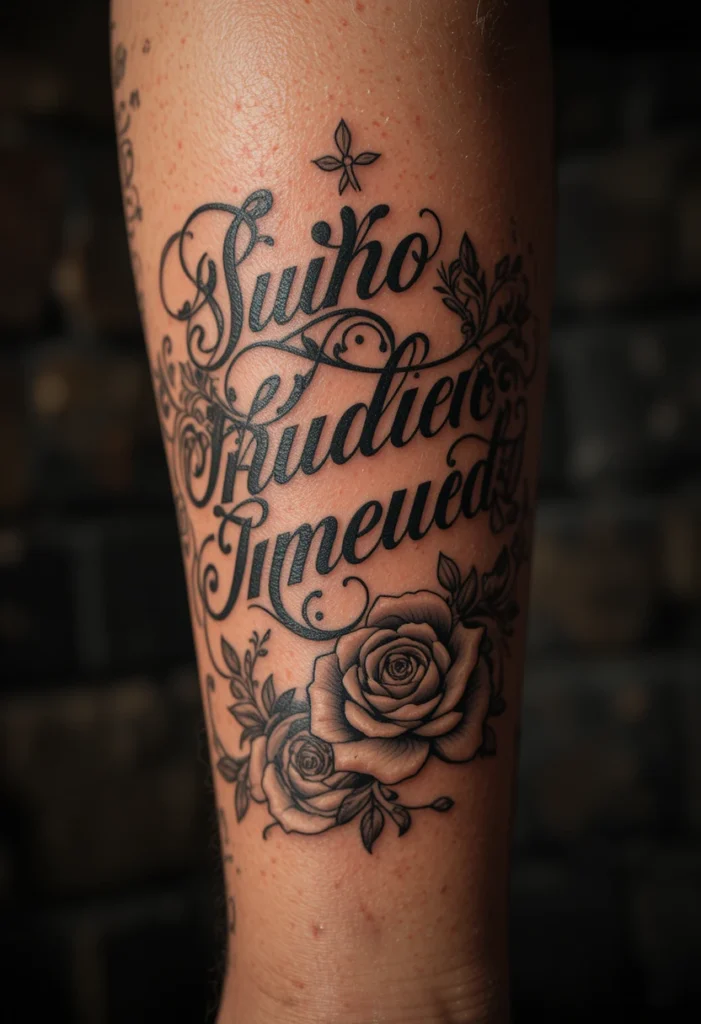
Chicano tattooing is known for its bold, dramatic lettering and intricate decorative flourishes. If you have an old name or word that you want to replace, you can layer a new, larger script directly over it. The trick is to use heavy black shadows and 3D effects that make the new letters pop off the skin while burying the old text underneath. Ornate crosses, roses, and clowns often accompany Chicano scripts, providing additional coverage options.
For example, a large, shaded “Los Angeles” or “Familia” can completely hide a smaller, faded tattoo if the letters are thick enough. The flourishes—swirling lines and diamond shapes—wrap around the lettering, breaking up any remaining traces of the original ink. This style is deeply cultural and works best on forearms, hands, or ribs. Find an artist who specializes in Chicano or black-and-grey realism to ensure the shading is smooth and the lettering is crisp. The result looks like a proud, heritage-driven piece with zero evidence of what came before.
11. Ocean Jellyfish with Flowing Tentacles
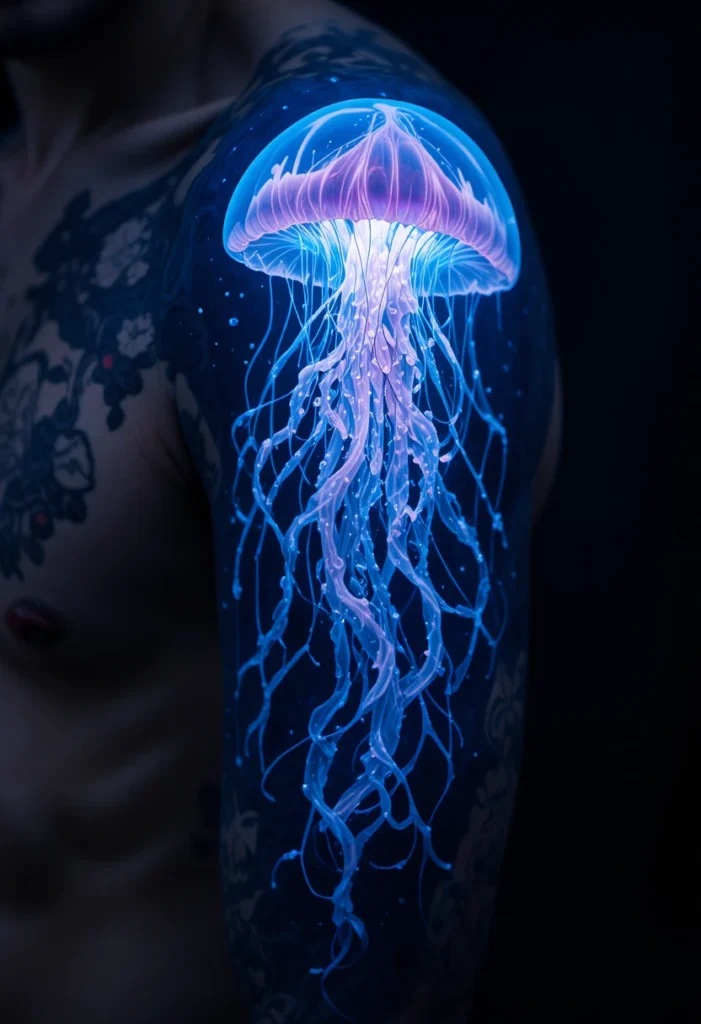
A jellyfish tattoo provides organic, flowing coverage that few other creatures can match. The bell-shaped dome can be filled with dense, stippled shading or deep blue-purple gradients to hide solid areas. But the real magic happens with the tentacles—thin, curling lines that drift downward and across the skin. Those tentacles can weave over and around the old tattoo, breaking it up into small, disconnected pieces that the eye no longer recognizes as letters or shapes.
You can add bioluminescent dots or neon accents to draw attention to the glow rather than the cover zone. Because jellyfish have no fixed skeleton, the design can stretch, twist, and expand to fit any body contour. This concept is especially beautiful on shoulders, ribs, or thighs where the tentacles can flow naturally with your movements. Pair it with a deep black background or leave it on bare skin for a delicate, ethereal look. Either way, the old ink becomes part of an underwater dreamscape.
Read also:23 Affordable Skin Care Ideas: Nourish Your Complexion Without Breaking the Bank
12. Realistic Animal Fur Patterns
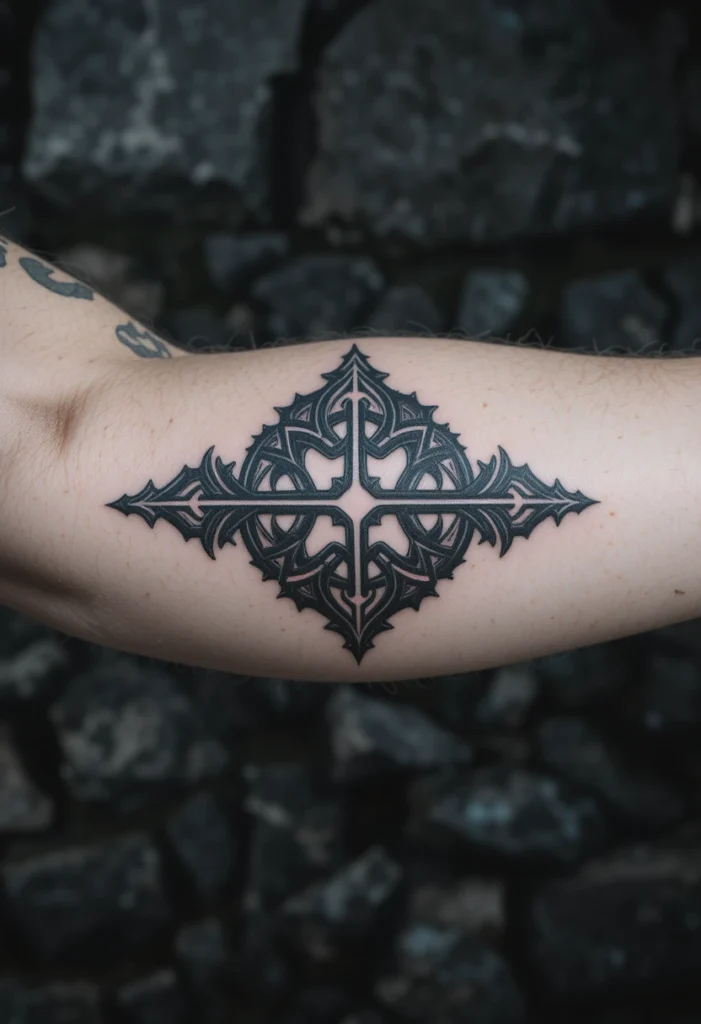
Leopard spots, zebra stripes, or tiger stripes are naturally chaotic, high-contrast patterns that excel at cover ups. Each spot or stripe can be carefully placed so that its darkest center lands exactly over the unwanted tattoo. The irregular spacing and varying sizes mean the artist can adapt the pattern in real time to hide different shapes. For example, a cluster of tight leopard rosettes works well over script, while larger, sweeping tiger stripes can obscure thick tribal bands.
Because fur patterns are highly recognizable, the viewer immediately understands what they’re seeing—no need to “search” for hidden flaws. This style works on almost any body part, from biceps to backs to ankles. The key is to use deep, saturated black for the spots or stripes, with warm browns or oranges in between for realism. You’re not just covering a tattoo; you’re wrapping yourself in the skin of a powerful animal.
13. Norse or Celtic Knotwork Panels
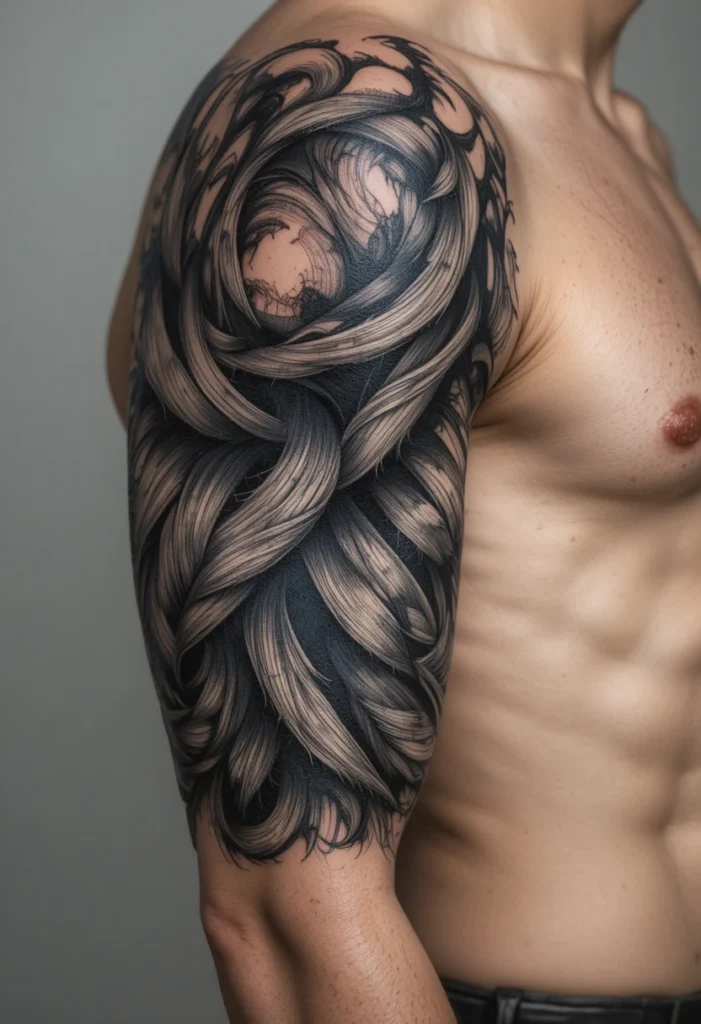
Celtic knots and Norse-style interlocking bands have been used for centuries to tell stories through endless loops and weaves. Those same loops provide a perfect hiding mechanism for old tattoos. A dense knotwork panel features thick, parallel lines that cross over each other, creating small triangular or diamond-shaped gaps. Your artist can align the thickest line crossings directly over your unwanted ink, while the gaps fall on clean skin.
Because the design is symmetrical and repetitive, the viewer’s brain follows the endless path of the knot rather than stopping on any single spot. You can incorporate runes, animals, or shield patterns for extra meaning. This style requires an artist who understands sacred geometry and consistent line weights. It works beautifully on forearms, shins, or the center of the chest. The final tattoo looks ancient, powerful, and completely seamless—as if it was always meant to be there.
14. Baroque Ornaments and Filigree
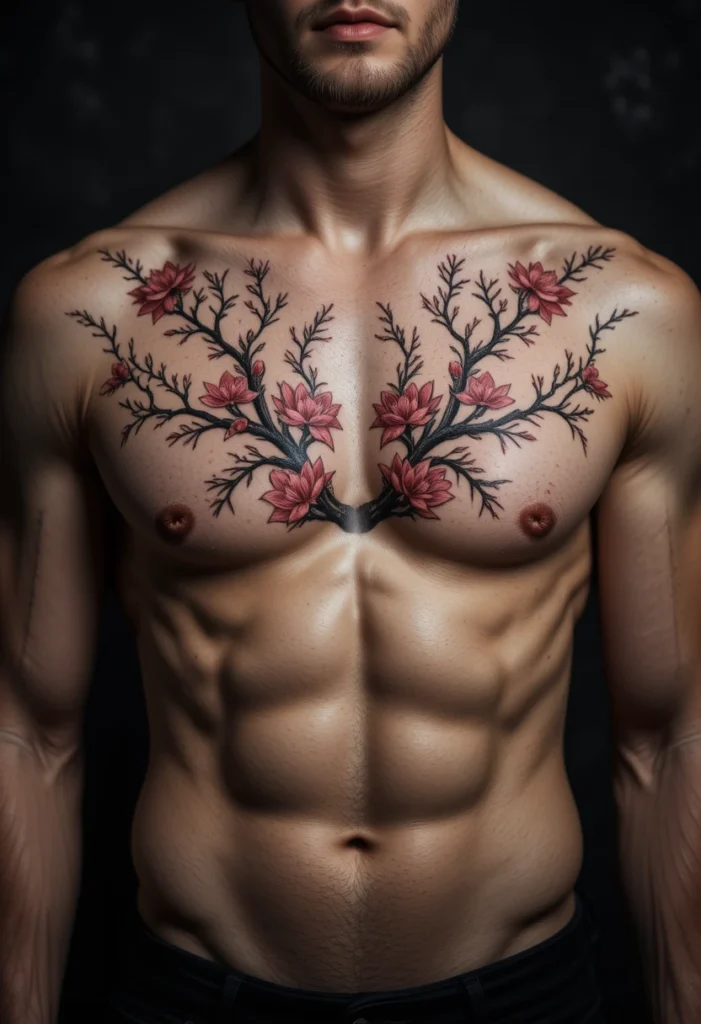
Baroque ornamental tattoos bring old-world elegance to cover ups. Think of swirling acanthus leaves, decorative scrolls, and intricate lace-like patterns that spread across the skin like jewelry. The heavy use of black shading and detailed negative space allows an artist to bury old ink within the darkest curls of the ornament. Because baroque designs are highly asymmetrical and organic, the artist can adapt the flow to wrap around the old tattoo’s exact shape.
You can place these ornaments on collarbones, hips, or even as a decorative spine piece. The style pairs beautifully with a central motif like a clock, heart, or gemstone, but it stands alone just as strongly. The final effect is luxurious and timeless—more like a permanent piece of filigree jewelry than a cover up. Make sure your artist has experience with fine-line ornamental work, as inconsistent spacing can ruin the illusion. When executed well, no one will ever suspect that beneath those elegant swirls lies a tattoo you once regretted.
15. Dark Forest Silhouettes
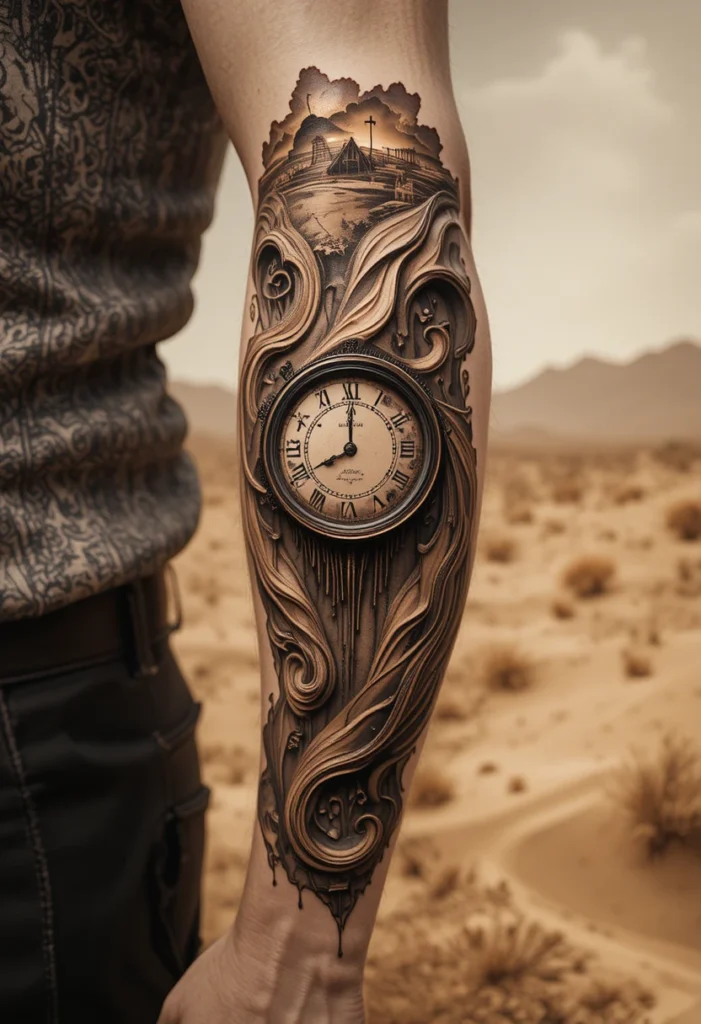
A dense forest silhouette tattoo turns your skin into a moody woodland scene. Tall pine trees, twisted oaks, or bare branches reach upward, their dark trunks and canopies creating natural shadows. An artist can place the thickest, blackest tree trunks directly over your old tattoo, while the gaps between trees reveal clean skin or subtle moonlit skies. Because forests are inherently chaotic—branches crossing, roots tangling—the design easily swallows irregular shapes like names or small symbols.
You can add a moon, stars, or tiny wildlife like wolves or owls for extra storytelling. This concept works best on forearms, thighs, or the entire back panel. The key is to vary the tree thickness and branch angles so the old tattoo gets broken into pieces that no longer form a recognizable shape. The result is a hauntingly beautiful piece that feels like a walk through a midnight woods. The original ink simply becomes part of the forest floor.
16. Surrealist Melting Clocks (Dali-Inspired)
Taking inspiration from Salvador Dali, a melting clock tattoo offers a surreal and artistic cover up solution. The soft, drooping forms of the clocks naturally distort space, making them perfect for hiding uneven or oddly placed old tattoos. An artist can position the thickest, darkest part of a melting clock face—where the numbers drip downward—directly over the unwanted ink. The flowing, liquid-like shapes continue across the skin, pulling the eye along their curves.
You can add barren tree branches, floating platforms, or abstract landscapes to fill out the composition. Because surrealism rejects rigid geometry, the artist has complete freedom to morph the design until every trace of the old tattoo is buried. This style is a conversation starter and works especially well on calves, ribs, or shoulders. Find an artist comfortable with black-and-grey realism and surreal concepts. The final piece looks like a fine art painting on your skin, with your past mistakes melted away forever.
17. Traditional American “Bold Will Hold” Eagle
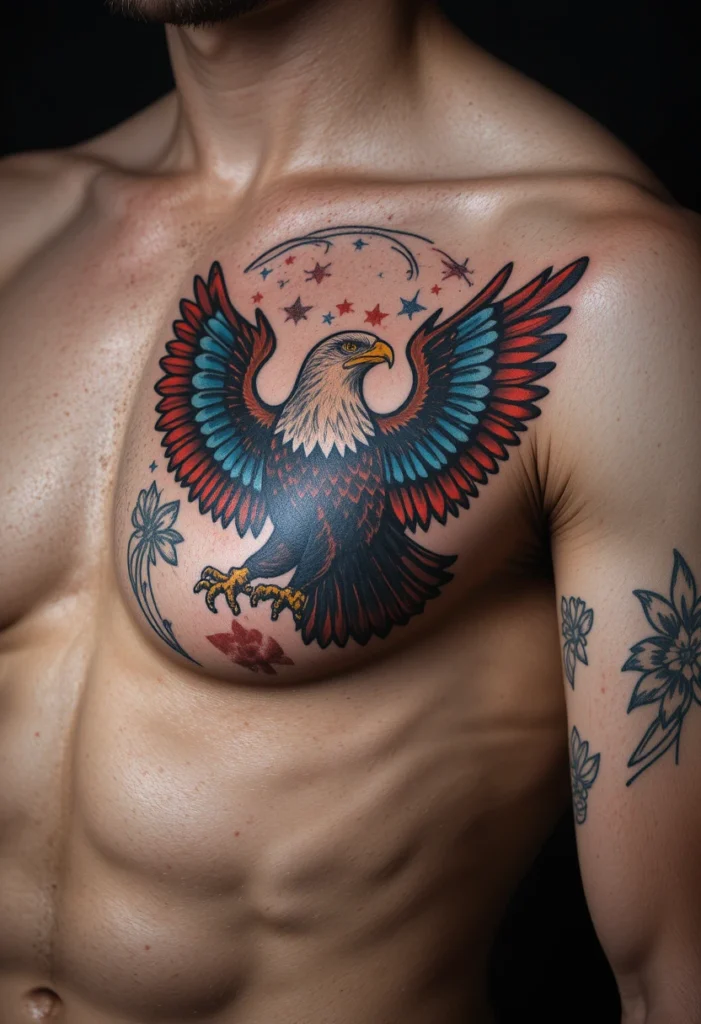
The traditional American eagle is a classic cover up for a reason: bold black outlines and heavy saturated color can hide almost anything. An eagle’s wings span wide, filled with dark browns, deep blues, and bright yellows. The layered feathers create natural shadows and lines that break up the old tattoo into smaller, unreadable fragments. You can position the eagle’s head and chest—the most detailed area—directly over the worst part of the old ink. The wing tips extend outward, drawing the eye across the design.
Because traditional tattooing uses simple, punchy shapes, there’s nowhere for the old tattoo to peek through. This works on shoulders, chests, or backs. Add a banner or a snake for more coverage. The style is timeless, masculine, and unapologetically bold. When done by an experienced traditional artist, your regret becomes a patriotic symbol of strength and resilience.
18. Glitch Effect or Distorted Portraits
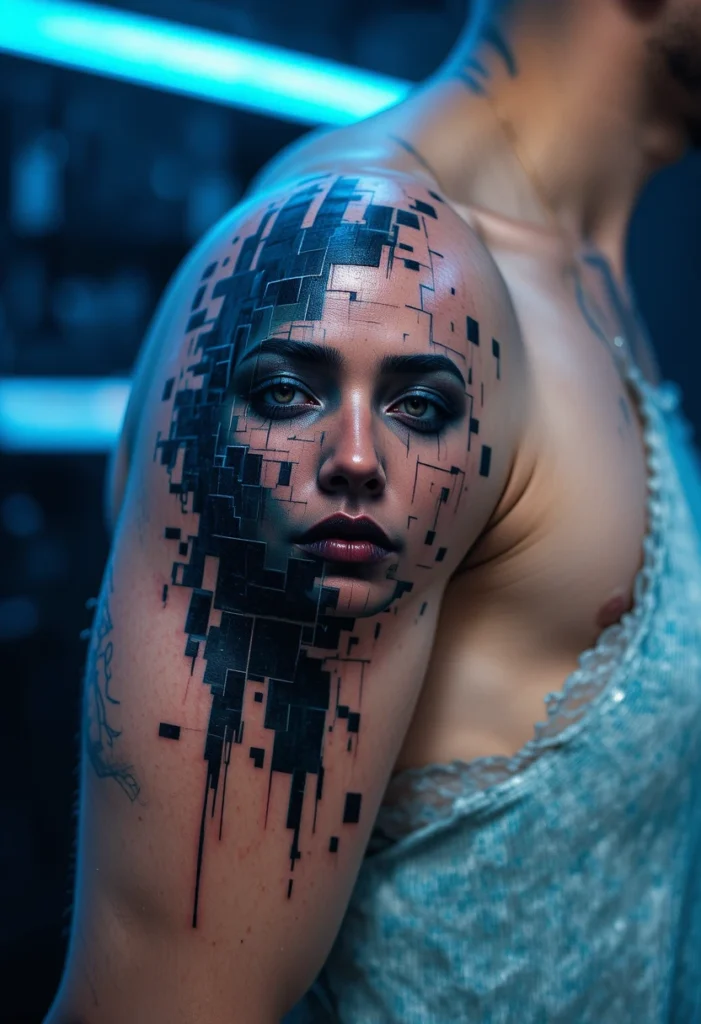
Glitch art tattoos mimic the look of a corrupted digital image—overlapping colors, displaced lines, and fragmented shapes. This style is incredibly effective for cover ups because the intentional “errors” can be placed exactly over your old tattoo. For example, a strip of magenta displacement can land right on an old name, while a cyan shadow shifts sideways to cover another area. The viewer’s brain reads the whole composition as a cool, modern effect rather than a cover up.
You can glitch a portrait, an object, or even abstract shapes. The key is to use bright, saturated neon colors alongside deep blacks for contrast. This concept works on forearms, thighs, or ribs. It’s essential to find an artist who understands both realism and digital art principles. The final tattoo looks like a screenshot from the future, and your unwanted ink becomes just another layer in the distortion.
19. Mosaic Tile Pattern with Colored Glass
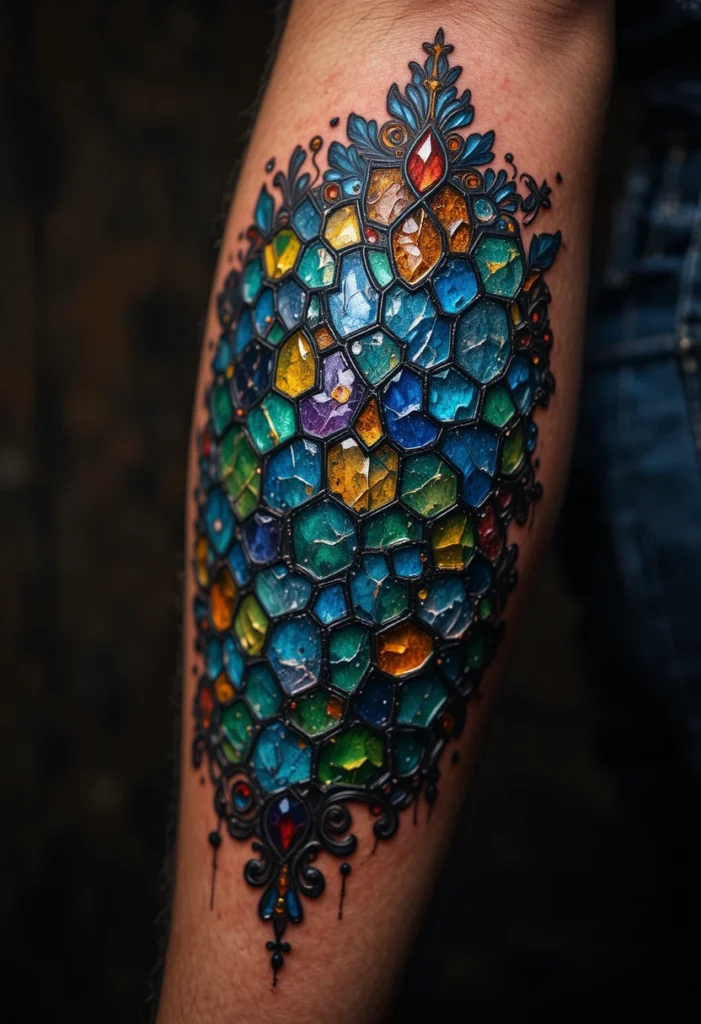
A mosaic tile tattoo breaks a larger image into hundreds of small, colored geometric pieces—like a stained glass window. Those individual tiles are perfect for cover ups because each tile can be adjusted in size and color to hide specific shapes. Your artist can design the mosaic so that a cluster of dark blue or black tiles lands directly over the old tattoo, while lighter tiles fill the surrounding skin. The grout lines between tiles (typically black or dark grey) further chop up any remaining evidence.
You can create a mosaic of a face, a flower, or an abstract pattern. The style works best on larger, flat areas like thighs, biceps, or shoulder blades. Because the human eye focuses on the overall image rather than individual tiles, the old ink disappears into the pattern. This is a time-intensive process, but the result is a stunning, one-of-a-kind piece that looks like ancient art.
20. Smoke and Ash Clouds with Hidden Faces
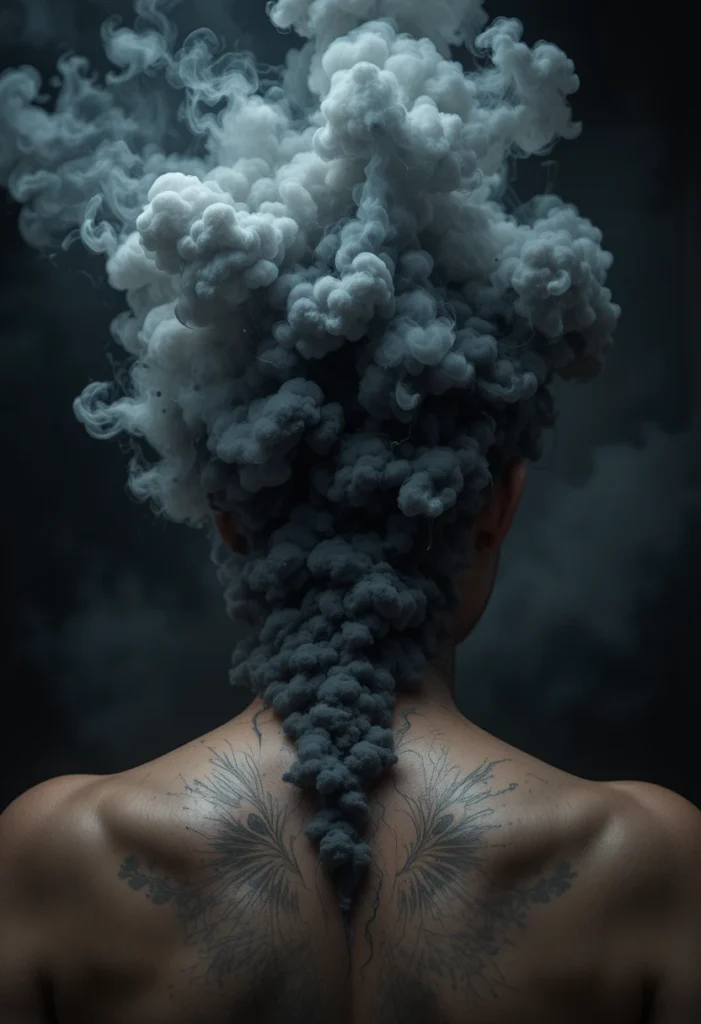
Smoke and ash tattoos are ethereal, moody, and highly adaptable. Swirling grey and black clouds can be shaped to flow around and over an old tattoo, using the darkest pockets of smoke as cover. The organic, wispy nature of smoke means there are no hard edges to betray the original lines. You can hide faces, skulls, or animals within the smoke for added depth—a technique often used in surrealism and realism.
For example, a profile of a woman might emerge from the clouds, with her dark hair and shadowed cheek exactly covering the unwanted ink. Because smoke has no fixed form, the artist can extend or tighten the design as needed. This concept is stunning on forearms, ribs, or the entire back. It requires an artist skilled in smooth black-and-grey blending. The final piece looks like a haunting memory, and your old tattoo simply evaporates into the mist.
21. Dense Pointillism Geometric Shapes
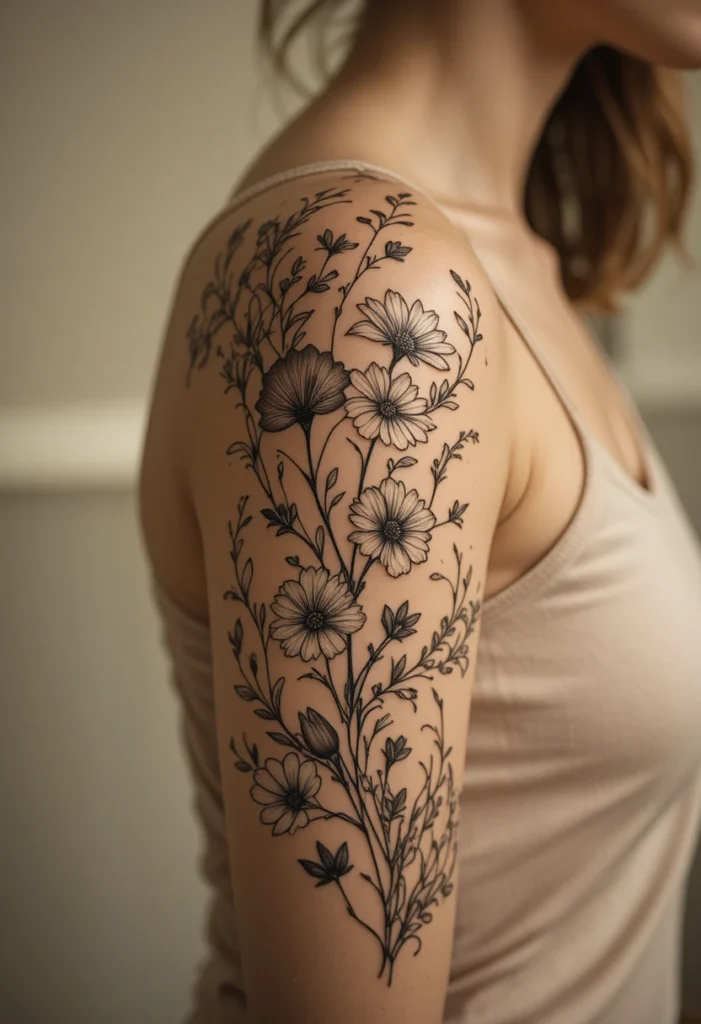
Pointillism uses thousands of tiny dots to create gradients and forms. When used for a cover up, an artist can cluster dots so tightly that they become a solid black area over the old tattoo, then gradually spread them out toward the edges. This creates a stippled fade effect that naturally draws the eye away from the covered spot. Geometric shapes like diamonds, triangles, or concentric circles work well because their sharp edges contrast with the soft dotwork.
You can create an entire sleeve of connected geometric dotwork patterns, with the darkest, densest sections strategically placed over your regrets. This style is meditative, modern, and ages gracefully because dots spread slightly over time but remain readable. It works on arms, legs, or the sternum. Find an artist who specializes in mandalas and dotwork. The result is delicate yet powerful—proof that even mistakes can become part of a larger, beautiful pattern.
22. Vintage Botanical Illustrations
Vintage botanical illustrations from the 1800s have a distinct charm: detailed linework, cross-hatching, and muted colors. An artist can take a plant like a thistle, fern, or poppy and use its dense root system or clustered seed pods to hide an old tattoo. The heavy black ink in the shadows and the intricate web of veins in the leaves provide perfect camouflage. Unlike modern hyper-realistic botanicals, the vintage style allows for imperfections and overlapping lines that actually help the cover up.
You can add a faded background tint or pressed herbarium labels for extra storytelling. This concept shines on forearms, ribs, or thighs. The key is to choose plants with naturally dark, chaotic areas—think artichokes, pine cones, or mushrooms. The final tattoo looks like a page from an antique field guide, and your old ink becomes just another layer of botanical history.
23. Tribal 2.0 – Modern Bold Black Shapes
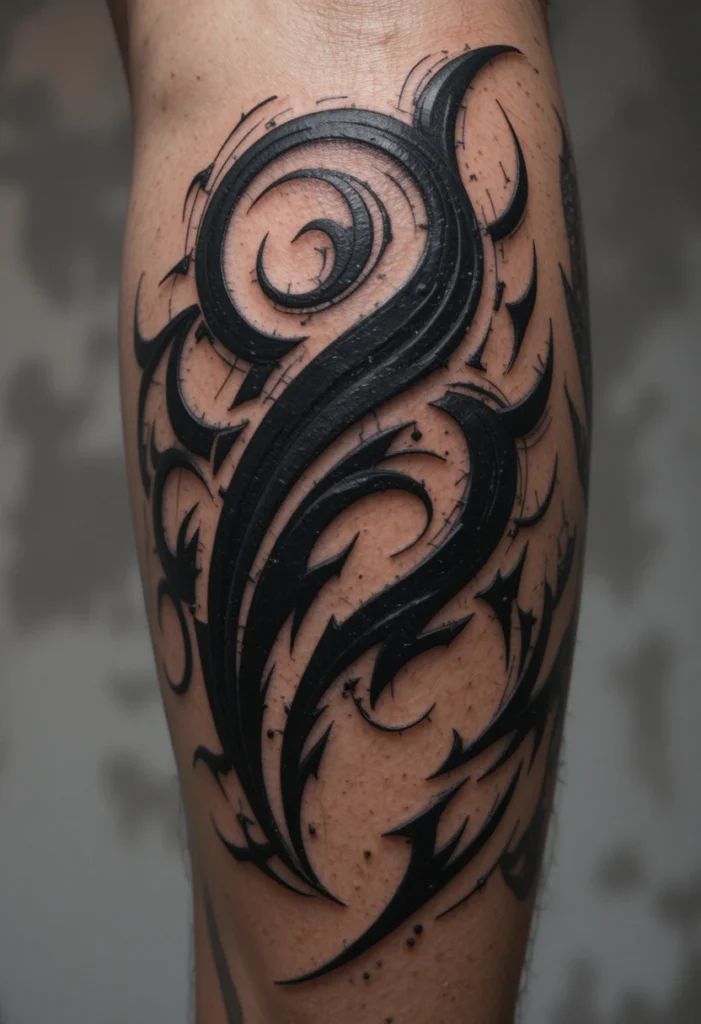
Old-school tribal tattoos are often what people want to cover. But modern tribal—sometimes called “Tribal 2.0”—reimagines the style with sleek, sharp, asymmetrical shapes and negative space cutouts. Instead of uniform bands, you get jagged shards, flowing cutouts, and contrasting smooth curves. An artist can design these bold black shapes so that the thickest, most solid areas land exactly over your old tribal or any other dense tattoo.
The negative spaces reveal clean skin, creating a high-contrast, futuristic look. Because the design is purely abstract, there’s no “right” or “wrong” shape—the artist can adapt it on the fly. This works beautifully on biceps, calves, or shoulders. The result is edgy, minimalist, and unapologetically bold. Your old tribal doesn’t get covered; it gets upgraded into something far more sophisticated.
24. Underwater Ruins with Kelp and Coral
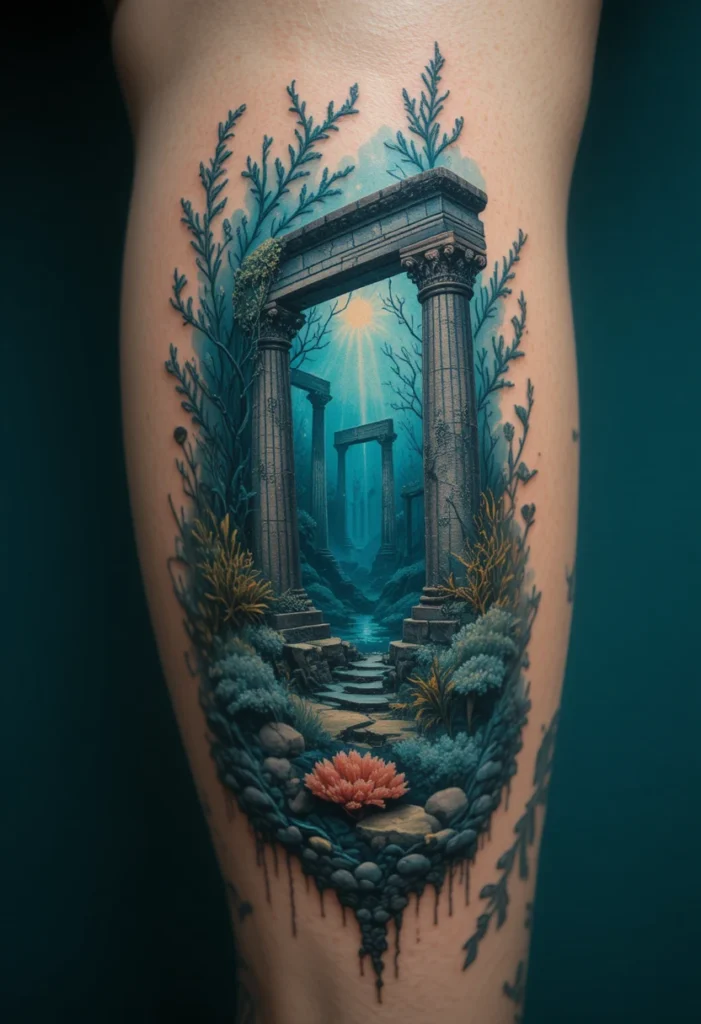
Combine architecture with ocean life: underwater ruins tattoos feature crumbling pillars, statues, and stone steps overtaken by kelp, coral, and barnacles. The deep shadows in the crevices of the ruins provide heavy coverage for old tattoos, while the organic growth of coral branches and seaweed strands adds chaotic, flowing lines that further break up the original design. You can hide lettering within the textural cracks of a stone column or bury a symbol under a cluster of sea anemones.
The contrast between the rigid, geometric ruins and the soft, waving kelp creates visual interest that distracts from any cover zone. This concept is ideal for large pieces on thighs, ribs, or full sleeves. Work with an artist who excels in both architectural realism and organic textures. The final tattoo tells a story of forgotten cities and nature reclaiming what was lost—much like you reclaiming your skin.
25. Stained Glass Rose Window
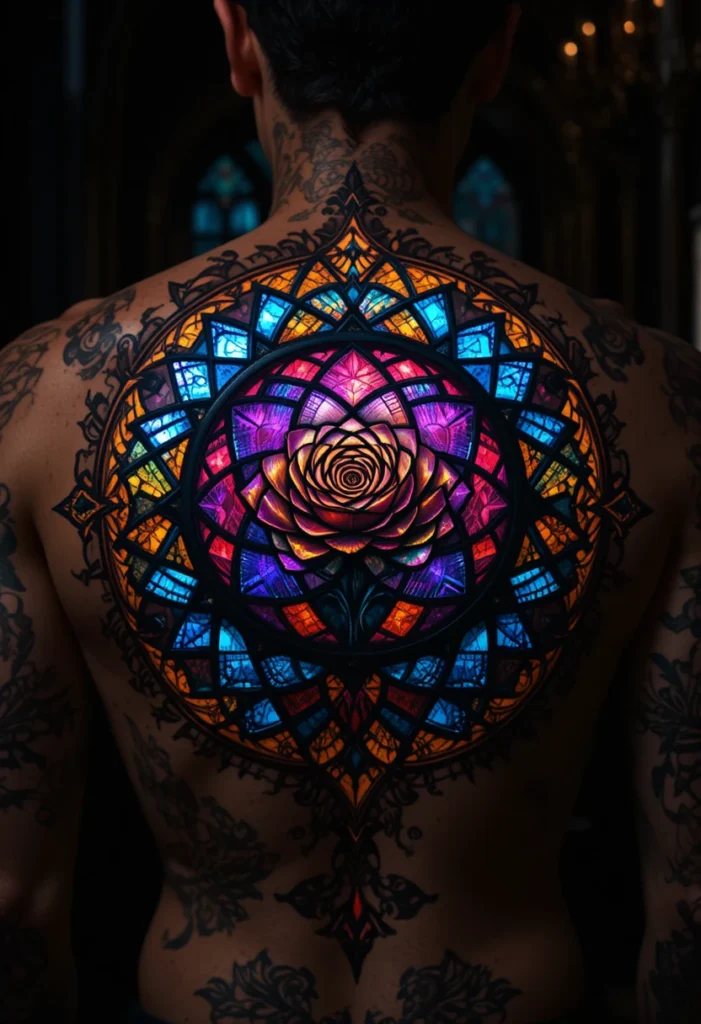
Inspired by cathedrals, a stained glass rose window tattoo uses concentric circles of colored glass segments, separated by thick black lead lines. Those lead lines are your best friend for cover ups: they can be made extra thick and placed directly over the old tattoo. The individual glass panes can be filled with deep reds, blues, and purples to maximize opacity. Because the design is perfectly circular and symmetrical, the eye is drawn to the center and then follows the radial pattern outward, never stopping to inspect any single pane too closely.
You can add a religious figure, a geometric mandala, or an abstract pattern in the center. This style demands precision and an artist who understands color saturation. It works beautifully on the upper back, chest, or thigh. The final piece is majestic, spiritual, and timeless. Your old tattoo becomes just another hidden piece of glass in a grand cathedral window.
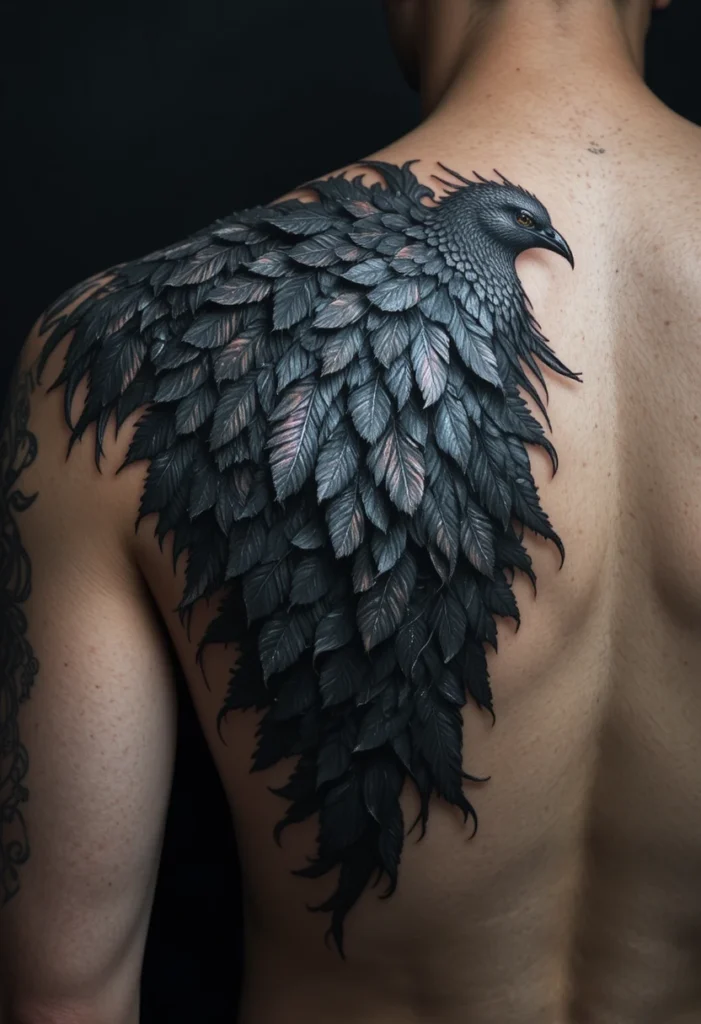
26. Dense Feathers from Mythical Birds
Phoenix or thunderbird feathers offer layered, overlapping textures that are naturally suited for cover ups. Each feather has a central quill (dark and solid) and thousands of tiny barbs that branch out. An artist can stack multiple feathers in a fan or wing shape, using the darkest quills and shadowed under-feathers to bury unwanted ink. The barbs can be drawn as individual lines or as solid black shapes, depending on the coverage needed.
Because feathers are not uniform—they twist, overlap, and vary in size—the design can be custom-fitted to any old tattoo. You can create an entire wing across your back or shoulder blade, or just a small cluster of feathers on the wrist. Add glowing embers or sparkles for extra distraction. This concept works in both realism and neo-traditional styles. The final tattoo feels light, powerful, and symbolic of rising from past mistakes—literally turning your regret into wings.
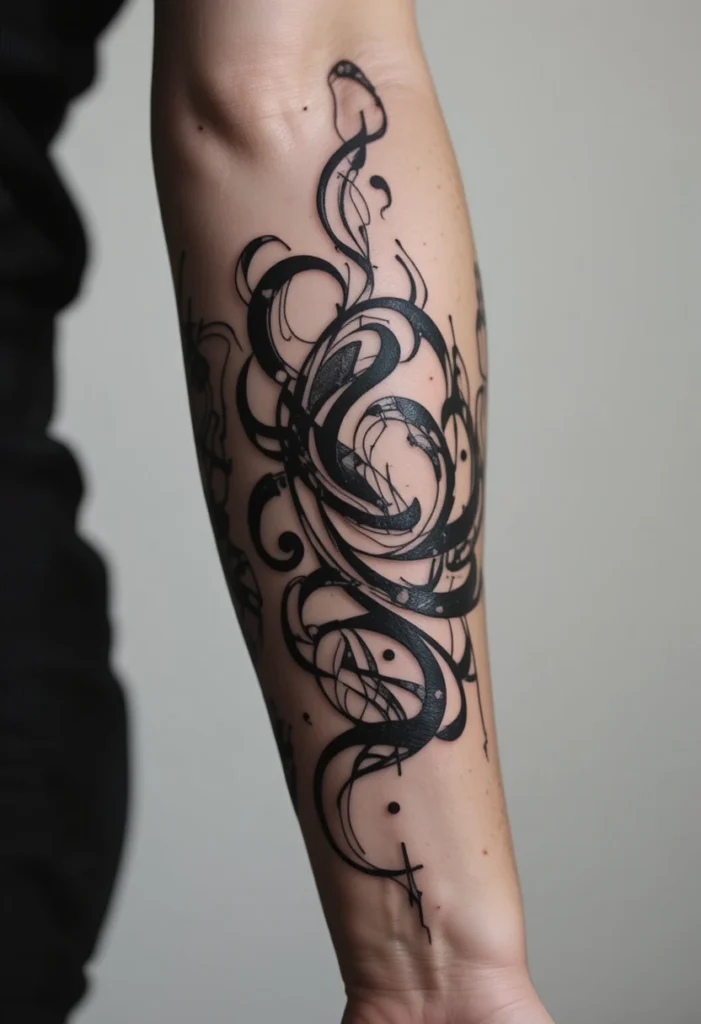
27. Completely Custom Abstract Blackwork Swirls
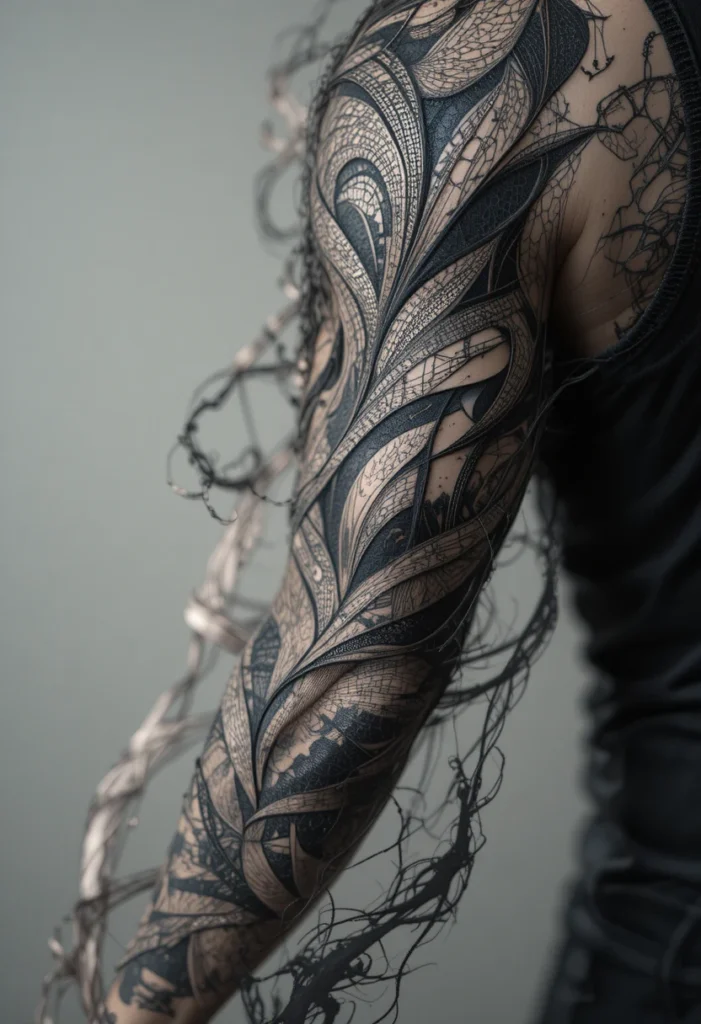
When all else fails, go fully abstract. Custom blackwork swirls have no rules, no symmetry, and no predetermined shapes—just flowing, organic forms made of solid black, whip shading, and negative space. Your artist can design these swirls in real time, watching how the old tattoo reacts to light and skin tone, and adjust the thickness of each pass accordingly. The darkest, densest swirls cover the original work completely, while lighter, faster fades create movement and breath.
Because there’s no “picture” to recognize, the viewer simply enjoys the rhythm of the ink. This style is incredibly freeing and works on any body part. It’s also one of the fastest cover up methods since you’re not building a realistic image. Find an artist who specializes in abstract or organic blackwork—someone who understands flow and body contour. The final tattoo is raw, artistic, and uniquely yours. No one will ever know there was something underneath, because the art itself is the statement. Your skin becomes a canvas of pure, intentional darkness and light.
Conclusion: Your Second Chance at Self-Expression
A bad tattoo doesn’t have to be a life sentence. With the right artist and a smart concept from this list, you can transform an old mistake into a piece you’ll proudly roll up your sleeves to show. Whether you choose dense blackwork florals, a cosmic galaxy, or a custom abstract swirl, the key is trusting the process and giving your artist enough room to work. Cover up tattoos require bolder lines, darker shading, and often larger dimensions than a fresh tattoo, but the payoff is worth every minute in the chair. Take your time researching portfolios, ask to see healed cover up examples, and be honest about what lies beneath. Your skin has a story—let the next chapter be one you love.

Mehboob Ahmad is the founder and writer behind BeautyVibeWorld. With a genuine passion for skincare, makeup, and everyday beauty routines, Mehboob started this platform to share simple, practical, and research-backed advice that real people can actually use without the confusion of conflicting trends and overhyped products.
Every article on BeautyVibeWorld is written with care, backed by research, and regularly updated to stay accurate and relevant. Mehboob believes good beauty advice should be honest, easy to follow, and free of unnecessary complexity.
Outside of writing, Mehboob enjoys exploring new beauty trends and staying up to date with the latest in skincare and haircare research to keep bringing fresh, reliable content to BeautyVibeWorld readers.