
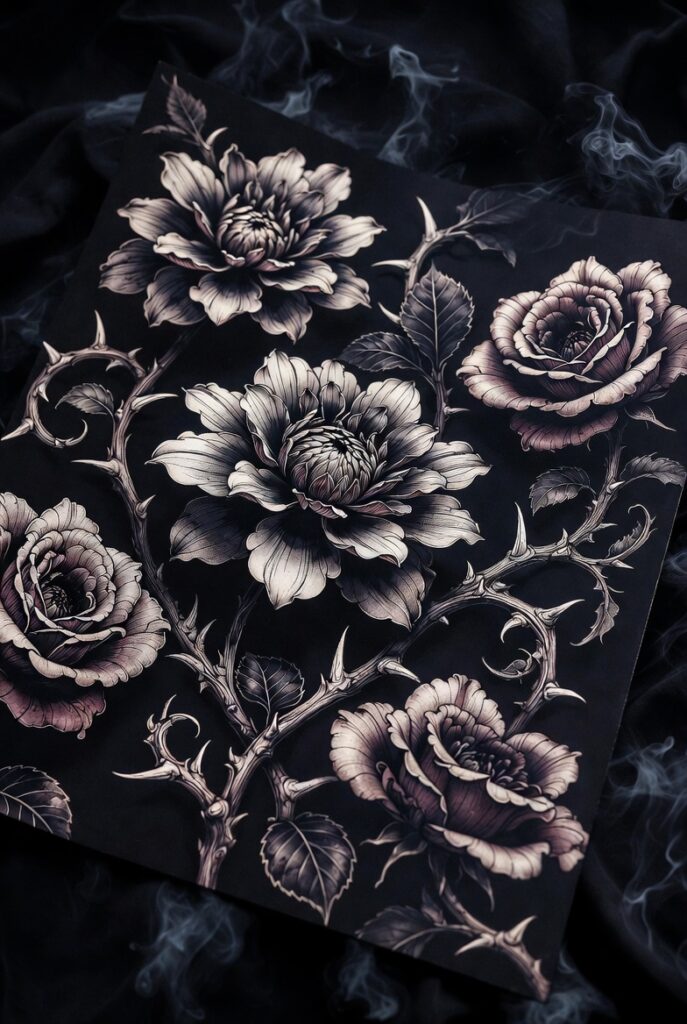
Noir Tattoo Looking for ink that balances delicate flora with a moody, shadowy aesthetic? Botanical noir tattoo ideas blend the organic beauty of leaves, vines, and flowers with the dramatic contrast of dark, gothic, or film‑noir influences. This style transforms everyday botanicals into something hauntingly beautiful—think wilting roses under a moonless sky, ferns frozen in winter’s grip, or ivy crawling through cracked stone. Whether you’re drawn to fine‑line shadows, deep blackwork, or vintage occult vibes, these 22 concepts will help you cultivate a design that feels both elegant and edgy.
Black Dahlia with Dripping Ink
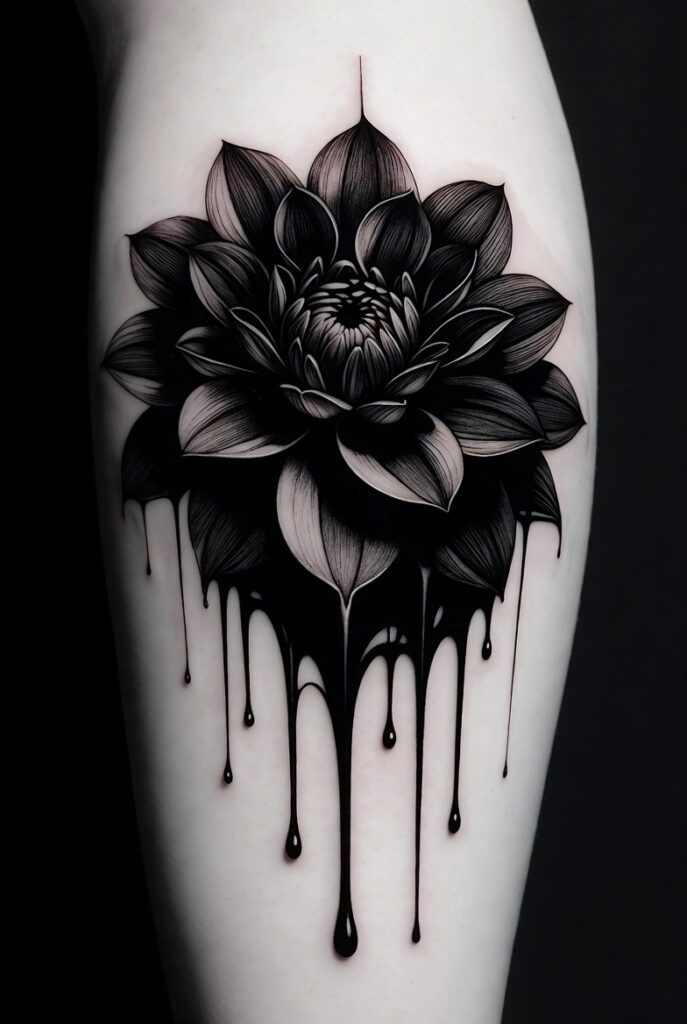
The dahlia’s layered petals already carry a sense of opulent mystery. In a botanical noir context, imagine this flower rendered in dense black and charcoal washes, with a few petals appearing to dissolve into thin, dripping lines of ink running down your skin. The contrast between the flower’s structured geometry and the fluid, almost melancholic drip creates a silent film aesthetic. Place it on your inner forearm or shoulder blade where the natural curves of your body mimic the droop of a rain‑soaked bloom. For extra noir atmosphere, leave the background completely bare except for a few scattered droplets, as if the flower is weeping into empty space.
Withered Rose Entwined in Barbed Wire
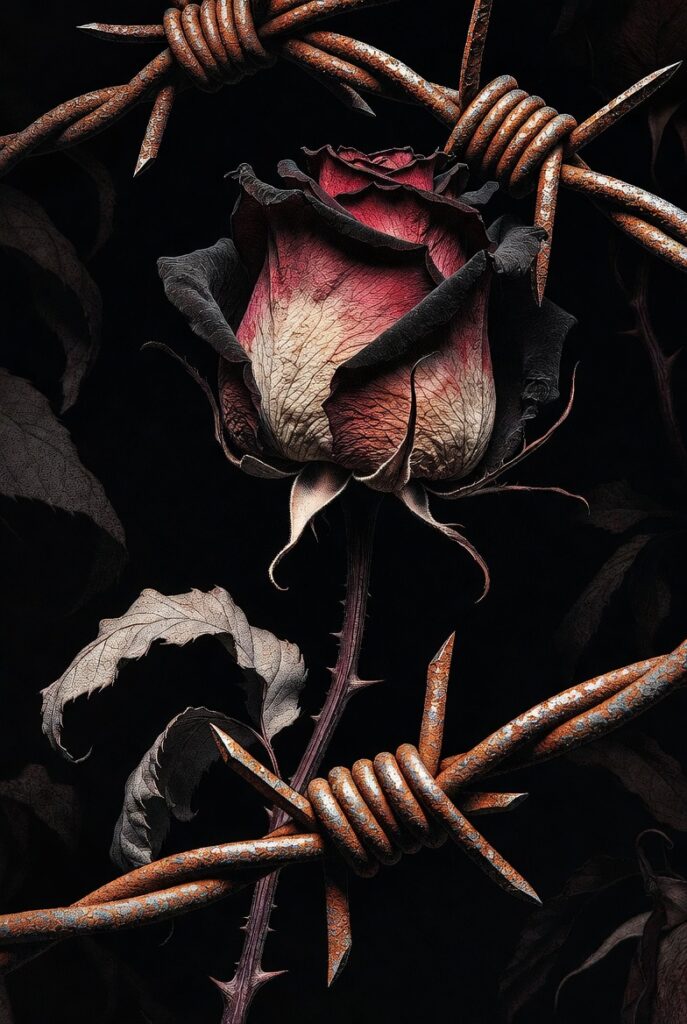
A classic rose tattoo takes a turn toward the brooding when you replace soft stems with rusted barbed wire. The rose should be shown past its prime—petals curling at the edges, a few fallen on the ground, and thorns that look sharp enough to draw blood. The barbed wire wraps loosely around the main stem, with some barbs hooking into the petals. Use stippling or fine dot work to suggest decay without making the image feel messy. This design works beautifully on the ribs or along the side of the calf, where the elongated composition can follow your body’s line. The emotional weight here speaks to beauty bound by pain, a perfect nod to classic noir tragedy.
Moonflower Vines Under a Crescent Moon
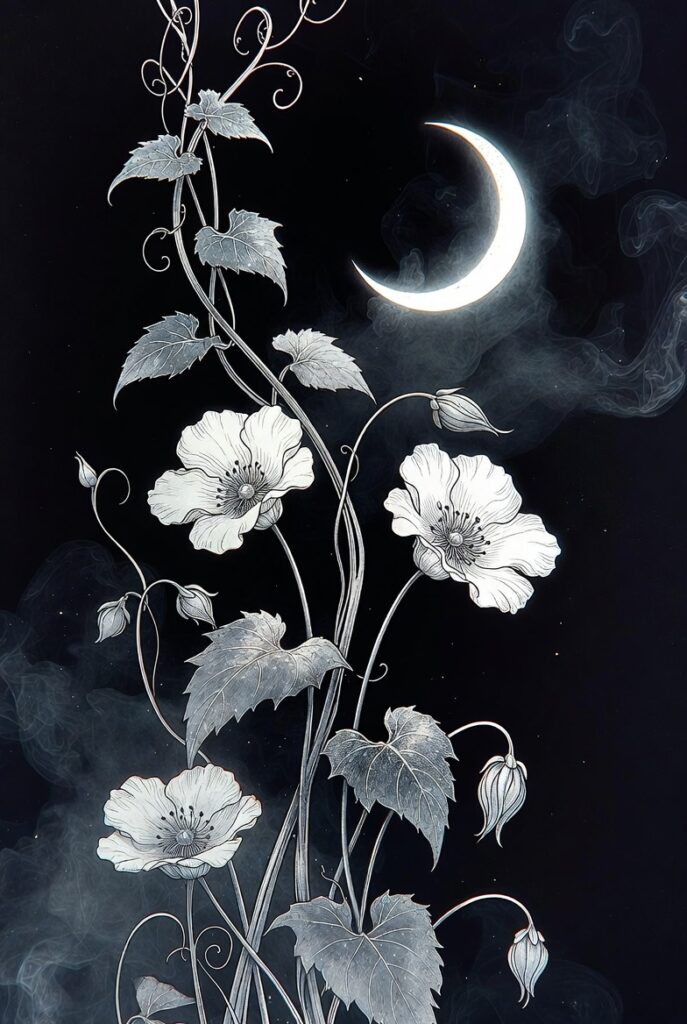
Moonflowers open only at night, making them ideal for a noir botanical piece. Draw several trumpet‑shaped blooms climbing upward along a gnarled vine, with a thin crescent moon hanging just above the highest flower. The petals should be pure white or left as negative space against a heavily stippled dark sky. Every leaf and tendril is outlined in crisp black, while the background fades into a granular, shadowy gradient. This tattoo tells a story of longing and hidden growth in darkness. Position it vertically on the spine or wrapping around the ankle. The absence of bright colors forces the eye to appreciate the interplay of light and shadow, a hallmark of noir style.
Poison Ivy Skull with Leafy Veins
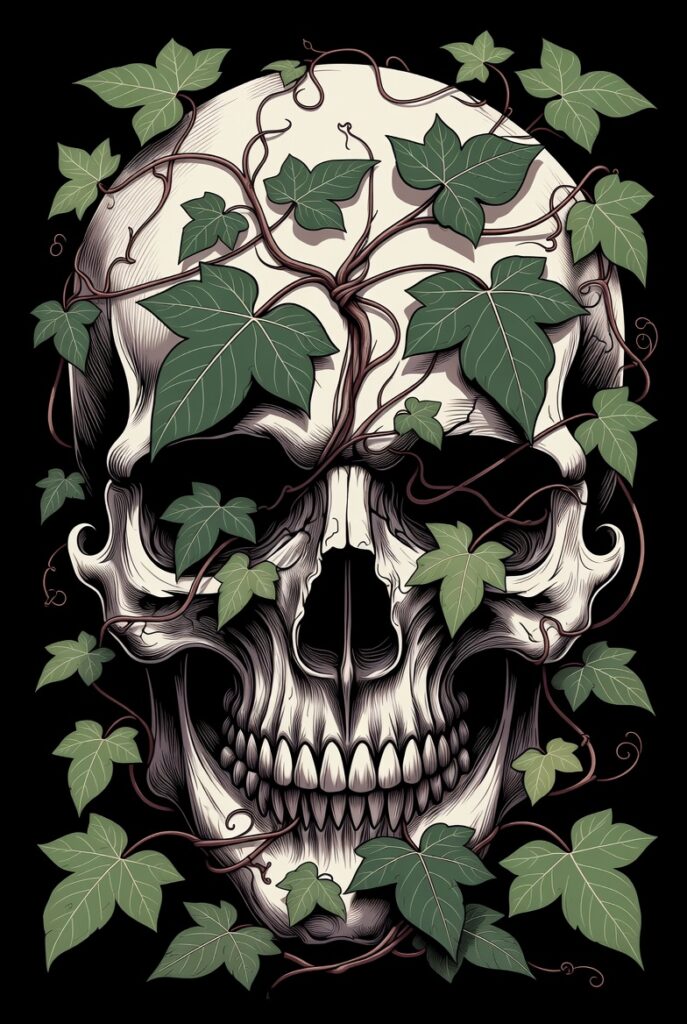
Take the common poison ivy plant and weave its three distinctive leaves into the cracks of a human skull. The skull can be half‑disintegrated, with fine root‑like veins spreading from the eye sockets and nasal cavity, each vein terminating in a small, toxic leaf. Use heavy black for the skull’s shaded areas and keep the leaves detailed with visible veining. A single drop of what looks like black sap or blood falls from the jaw. This concept marries mortality with nature’s revenge, perfect for anyone who loves gothic symbolism. Because of its detail, place it on the upper thigh or shoulder where there’s room to appreciate the tiny linework.
Fern Frond in a Vintage Magnifying Glass
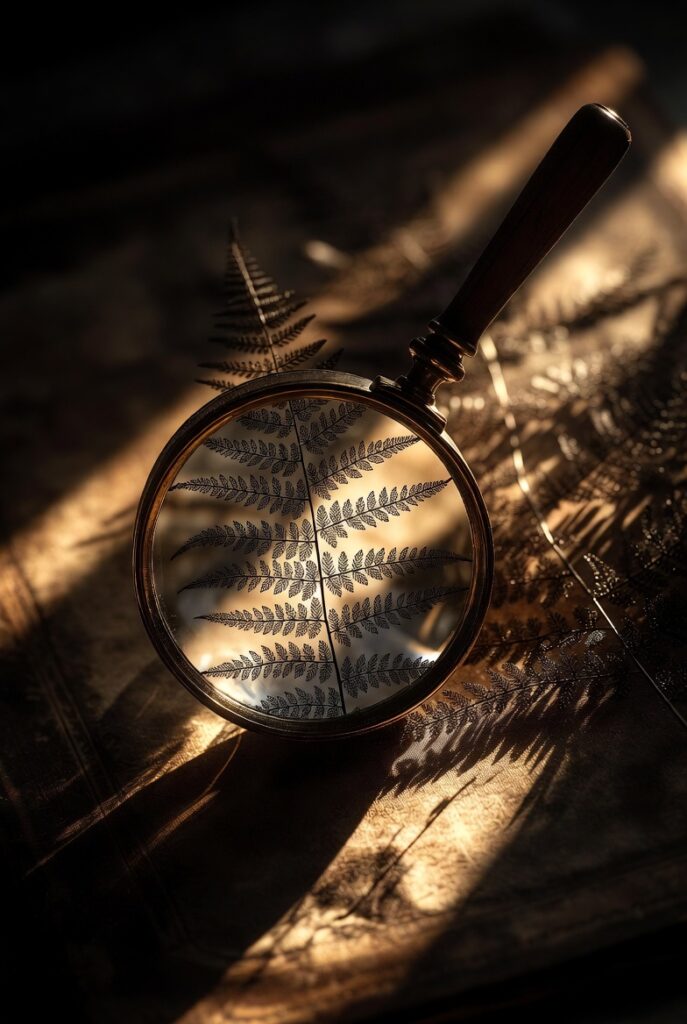
A single fern frond unfurls inside the circular lens of an antique magnifying glass, but something is off—the fern’s edges are jagged and its spores appear as tiny black holes. The magnifying glass itself is rendered with ornate, slightly tarnished metal handles and a cracked glass edge. Beyond the lens, the rest of the design fades into pure blackwork smoke or fog. This idea plays with the voyeuristic, obsessive side of noir—studying nature until it becomes alien. The circular shape fits perfectly on a knee cap, outer wrist, or the back of the neck. Use thin, scratchy lines for the fern to give it an almost etched, vintage scientific illustration feel.
Belladonna Berries on a Silver Tray
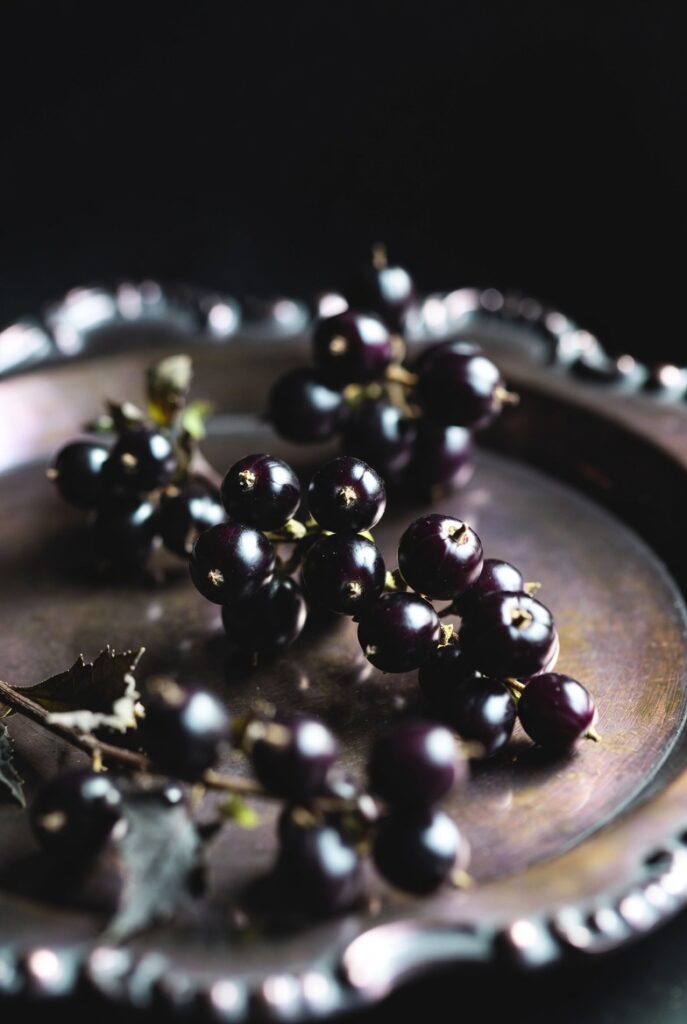
Belladonna, also known as deadly nightshade, carries an inherent noir reputation. In this design, a cluster of glossy black berries and a few purple‑green bell‑shaped flowers rest on an ornate silver tray with tarnished edges. The tray reflects the berries in a distorted, darker way, almost like a funhouse mirror. Use high contrast shading on the berries to make them look plump and poisonous, while the tray is rendered with delicate crosshatching to suggest antique metalwork. A single berry has rolled off the tray, leaving a faint trail of shadow behind it. This composition fits well on the outer forearm or above the elbow, where the horizontal orientation of the tray can align with your arm’s natural width. The imagery whispers of temptation, secrets, and the dangerous side of botanical beauty.
Weeping Willow with Tangled Roots
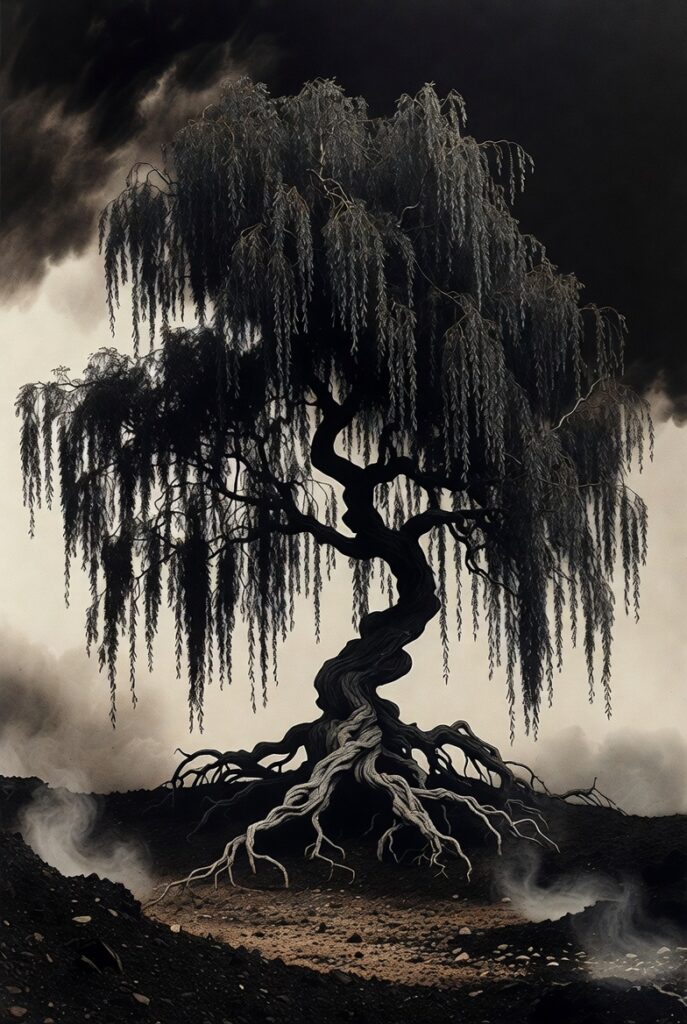
A weeping willow in daylight feels calm and nostalgic, but in botanical noir style, it becomes a monument to grief. Draw the willow’s long, drooping branches as heavy black strokes that nearly touch the ground, with individual leaves rendered as tiny teardrops. The trunk is twisted and scarred, and at its base, the roots break through the soil like clutching fingers. Surround the tree with a few scattered fallen leaves and nothing else—no sky, no grass—just the tree emerging from pure darkness. This tattoo works perfectly on the back of the calf or along the ribs, where the vertical drop of the branches follows your body’s line. The emotional tone is one of quiet sorrow and resilience, a classic noir mood.
Shadowy Succulent in a Cracked Pot
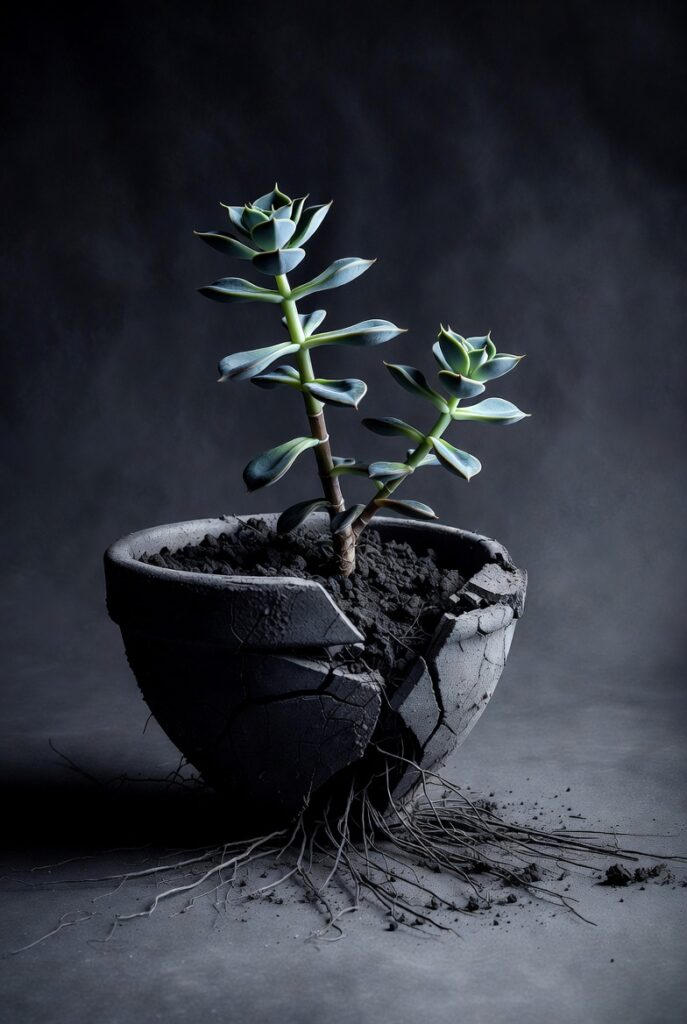
Succulents are usually cheerful, but a noir succulent plays with negative space and jagged edges. Picture a rosette‑shaped echeveria where each leaf is filled with dense black stippling at the center, fading to bare skin at the tips. The plant sits inside a terracotta pot that has a large crack running down its side, with a single dark root snaking out through the break. Instead of bright highlights, use gray washes and tiny dots to create a gritty, almost dusty texture. This design is perfect for a smaller placement like the inner wrist, behind the ear, or on the ankle. It turns a common houseplant into something mysterious—still alive, but barely, and watching from the shadows.
Poison Hemlock Stem Cutting
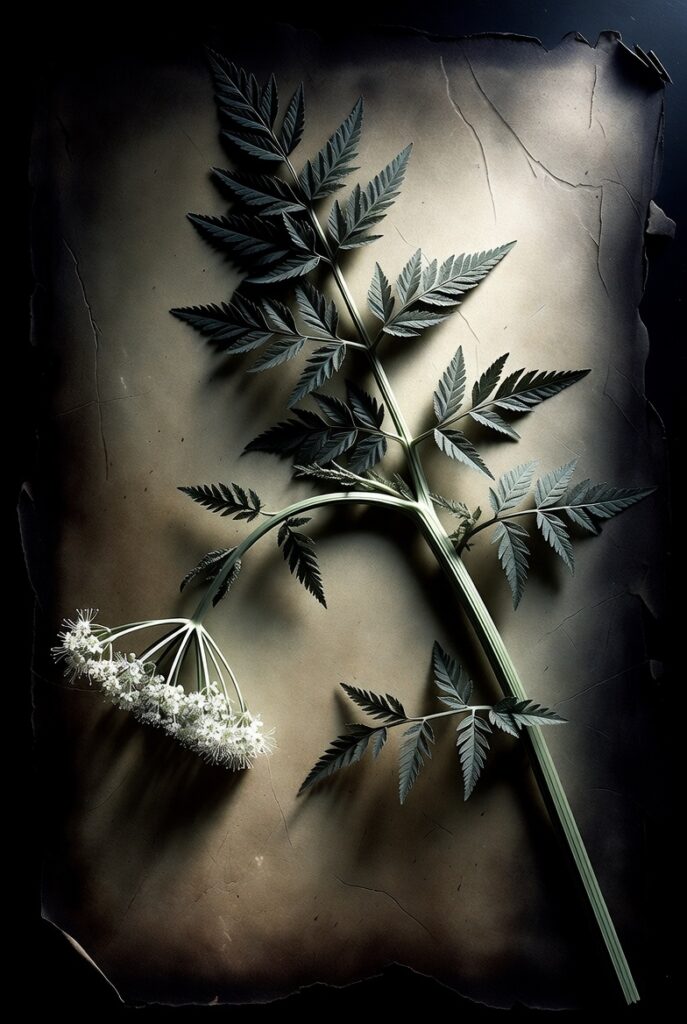
Poison hemlock is famous for its role in historical executions, and its delicate, feathery leaves make a surprisingly elegant noir tattoo. Draw a single stem with finely divided leaves, but show it mid‑cut—a pair of old scissors with rusted blades just snipping through the stem. A few drops of black sap fall from the cut end, and the lower half of the plant has already wilted into a dark, curling mass. The scissors should be shaded with vertical line work to mimic aged steel. Place this vertically on the shin or along the collarbone. The idea captures a decisive, fatal moment—nature interrupted by human intention. It’s subtle enough for a first tattoo but loaded with literary noir symbolism.
Ghost Pipe Monotropa in a Foggy Forest
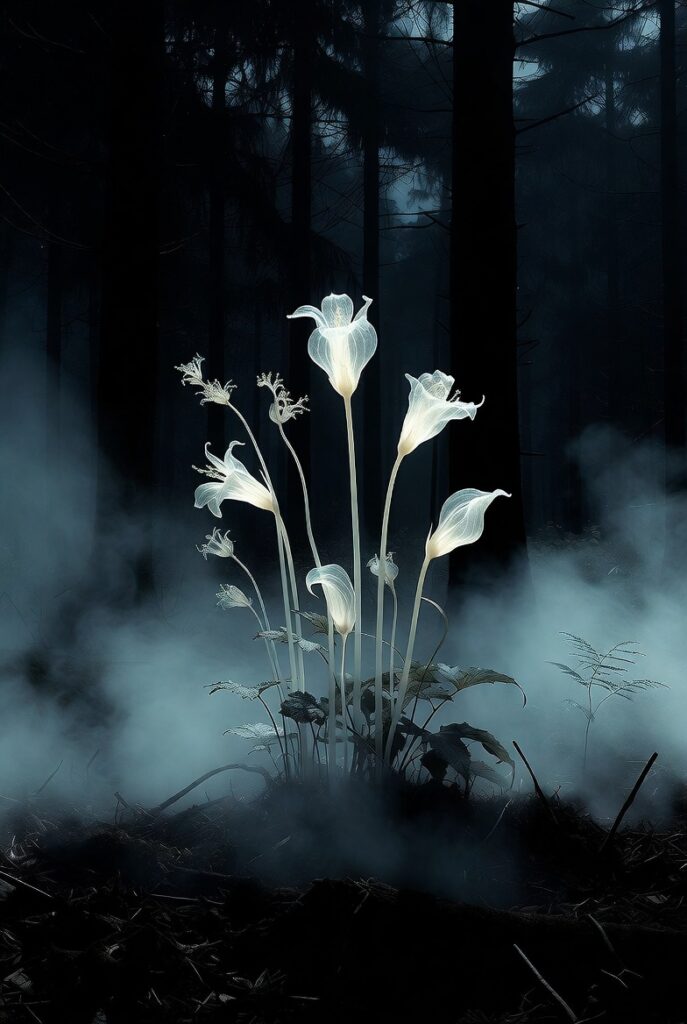
Ghost pipe plants are pale, almost translucent flowers that lack chlorophyll. For a noir take, draw a cluster of these nodding white blooms emerging from a bed of decaying leaves. The entire background is a wash of soft gray and black like dense fog, while the ghost pipes themselves are left as negative space with only thin black outlines and tiny scales. A single, darker mushroom or fern frond looms vaguely behind them, barely visible. This tattoo feels haunting and delicate, perfect for the inner bicep or the side of the neck. Because of the high reliance on negative space, it requires a skilled artist who understands how to balance black ink with bare skin. The result is a botanical ghost story frozen on your body.
Dead Lotus on Still Water
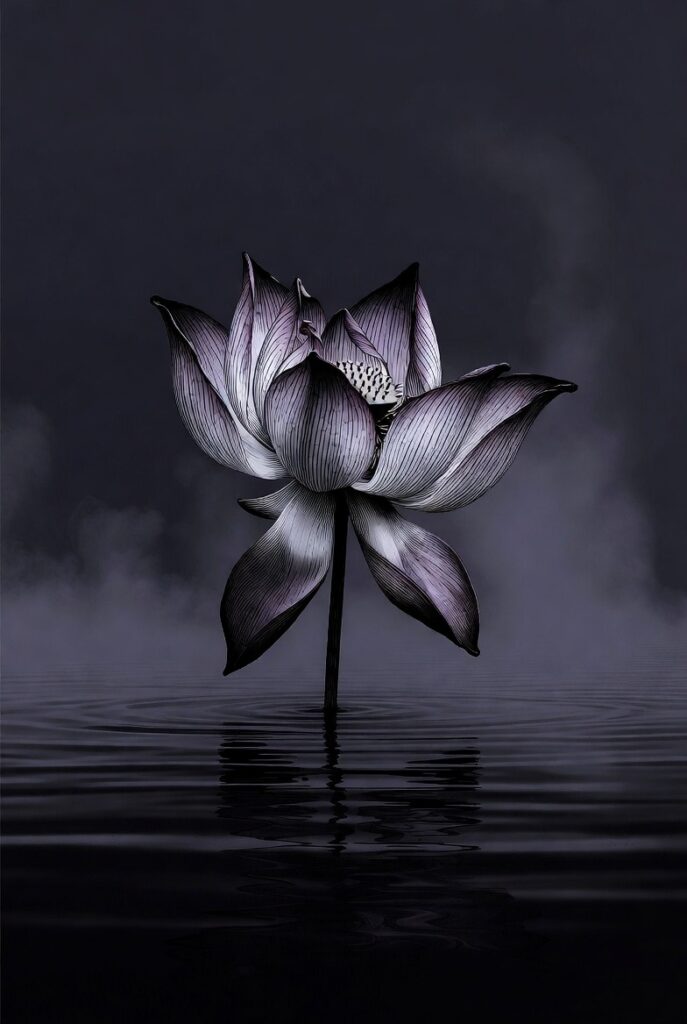
A lotus usually symbolizes rebirth, but a dead lotus speaks to cycles that end in silence. Draw the flower with its petals collapsed inward, edges curling and darkening like burnt paper. The stem bends sharply, disappearing into a pool of black water below. On the water’s surface, add a few concentric ripples and a single floating petal that has already turned half‑transparent. Use smooth gradients from dark gray to pitch black for the water, and keep the lotus itself detailed with fine cracks and wrinkles in the petals. This design fits well on the shoulder blade or the back of the hand. It’s a quiet meditation on decay and acceptance—very much in line with noir’s bittersweet worldview.
Thorned Bramble Framing an Empty Eye
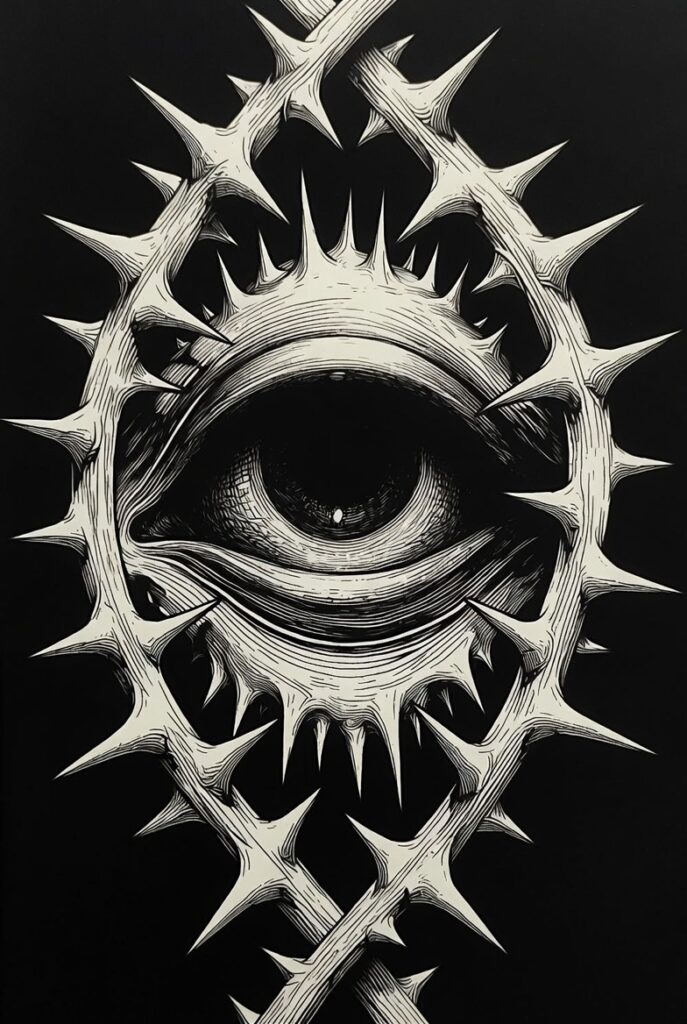
Imagine a large, empty eye shape—no iris, no pupil, just the almond outline of a human eye—and surrounding it, a thorny bramble of blackberry vines. The vines weave over and under the eye’s contour, with sharp thorns pointing inward as if ready to scratch the cornea. A few small, unripe blackberries hang from the vines, their surfaces dotted with tiny stippled textures. The eye itself should be shaded lightly at the corners to give it depth without adding a literal eyeball. This tattoo works brilliantly on the outer wrist, the nape of the neck, or behind the knee. It evokes themes of vigilance, pain, and the feeling of being watched by nature itself—pure botanical noir.
Orchid with Spiderweb Veins
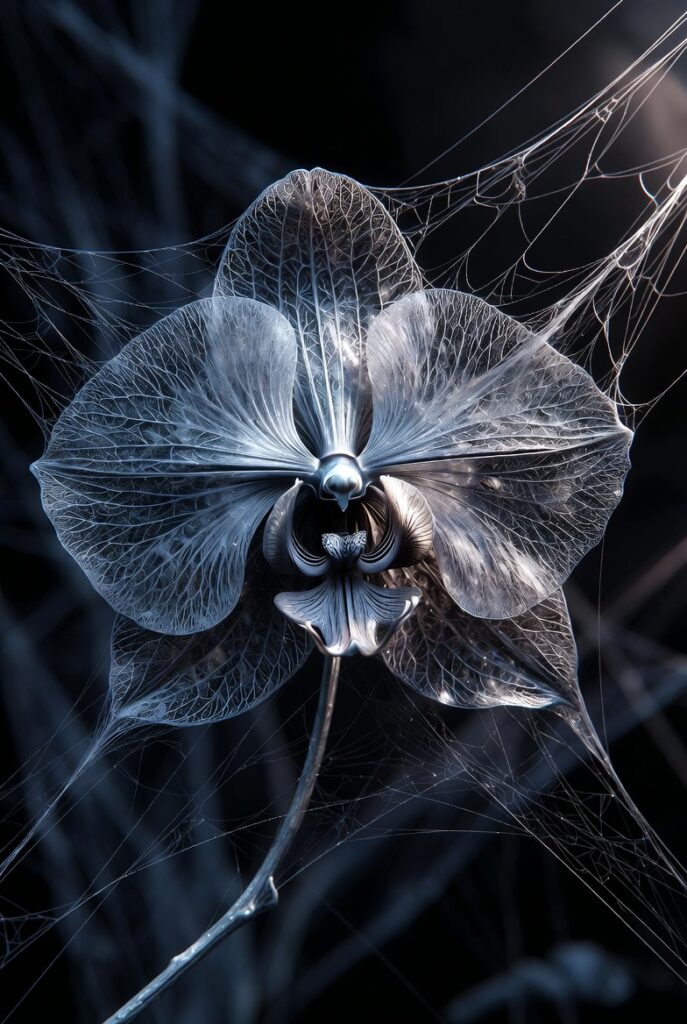
Orchids are exotic and sensual, but a noir orchid twists that sensuality into something predatory. Draw a single, large orchid bloom with its lip petal shaped like a dark cave. The veins running through the petals are not green but black, spreading like spiderwebs or cracked glass. One edge of the flower shows signs of necrosis—tiny black spots and a withered tip. Use bold outlines for the overall shape but switch to thin, erratic lines for the veins to create tension. A single long root curls down from the base of the flower, ending in a sharp point. Place this on the front of the thigh or the sternum for maximum impact. The orchid becomes less a flower and more a trap, beautiful and dangerous.
Cattails in a Murky Swamp
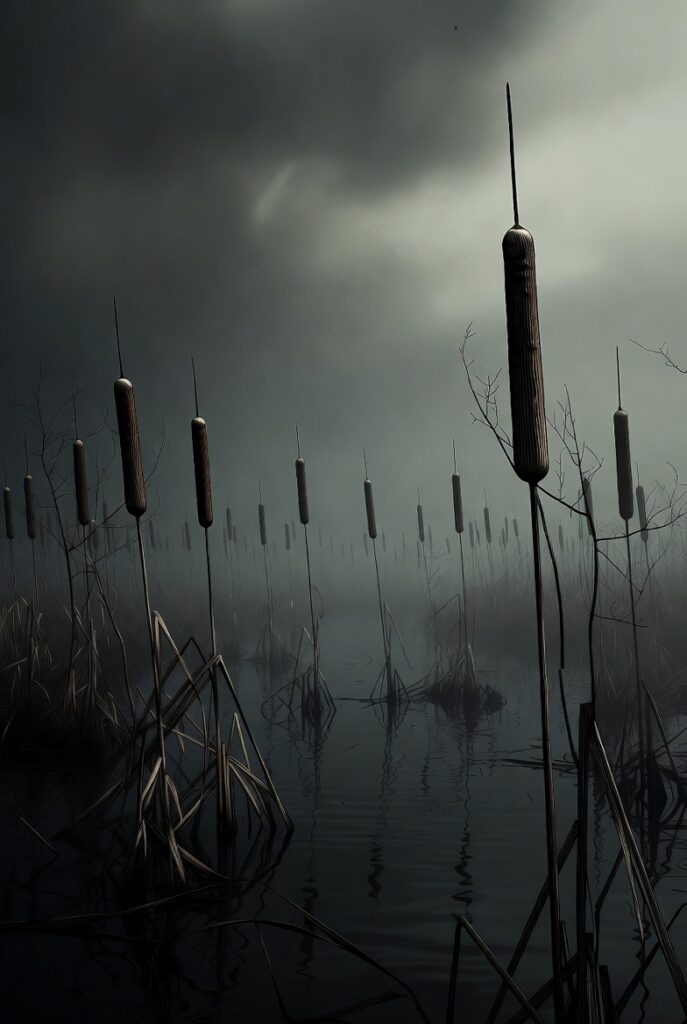
Cattails grow in wetlands, but a noir version places them in a swamp at midnight. Draw three cattails at different heights, their sausage‑shaped seed heads split open slightly to release dark, smoke‑like fluff into the air. The stalks are tall and thin, reflected imperfectly in the black water below. Add a single, half‑submerged skull or a broken bottle near the base for an extra layer of narrative. Use heavy black ink for the cattail heads and stippling for the floating seeds. The water should be a solid black field with a few faint ripple lines near the stalks. This tattoo naturally fits a vertical placement like the forearm or the side of the torso. It tells a story of hidden places, stagnant beauty, and the life that thrives in decay.
Wilted Sunflower Facing Down
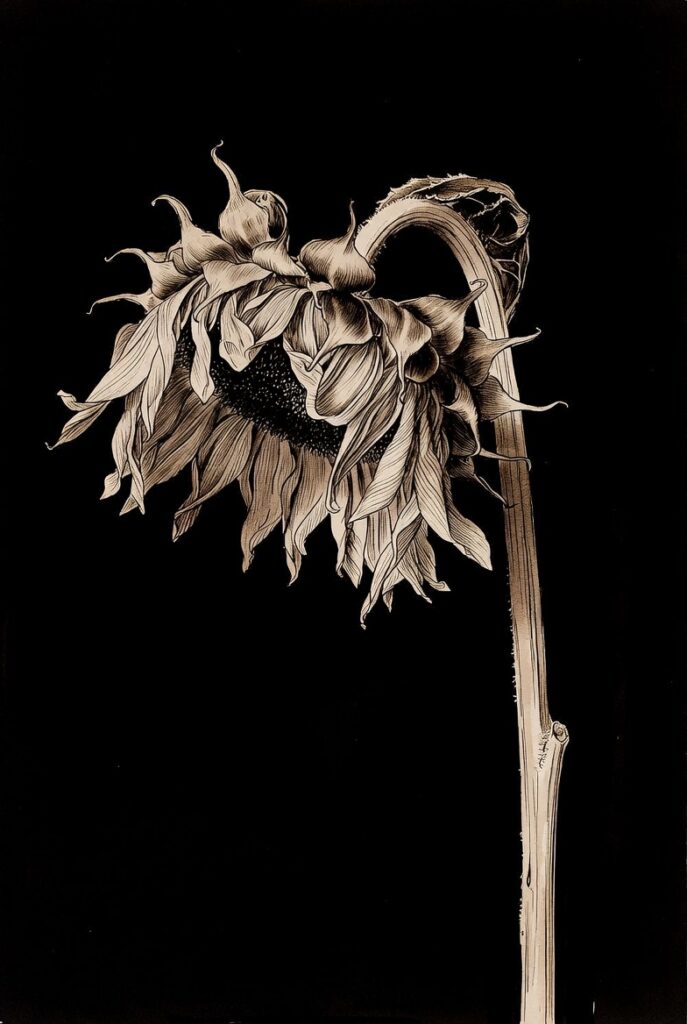
A sunflower that has turned away from the sun is the ultimate noir contradiction. Draw the large flower head drooping so low that the petals almost touch the stem. The center disk is rendered as a dense black spiral with tiny seed pockets that look like empty eyes. Petals are curled and browned at the edges, some already fallen. The stem is bent in a sharp, painful angle. Use dramatic chiaroscuro—deep shadows on the underside of the flower, brighter gray on the top side that still faces downward. This design works beautifully on the shoulder or hip. It symbolizes lost hope, the end of a cycle, or beauty that has outlived its purpose. Noir is full of such fallen icons, and this tattoo wears that melancholy proudly.
Fern Unfurling from a Cracked Hourglass
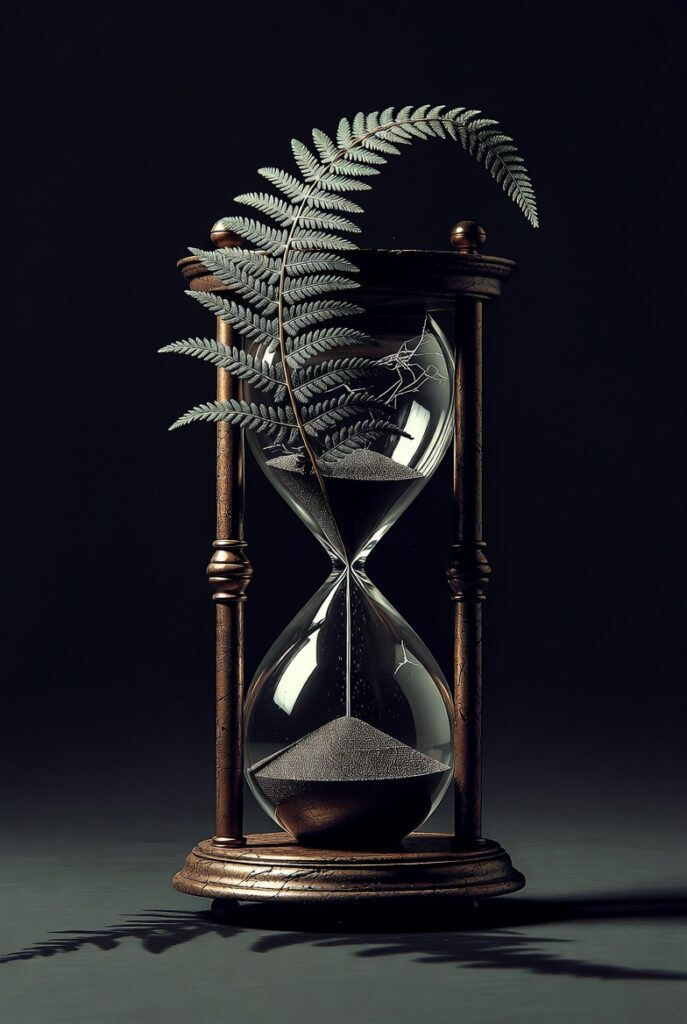
Combine time and nature with a fern fiddlehead (the curled young frond) pushing its way out of a broken hourglass. The hourglass lies on its side, the glass cracked, and all the sand has spilled out into a dark pile. From the largest crack, the fern emerges, already starting to unfurl. The hourglass frame is ornate, with gothic flourishes, and the fern’s spiral is rendered with thick and thin line variations to give it organic energy. A few grains of sand cling to the fern’s surface. This tattoo fits perfectly on the inner forearm or the calf, where the horizontal hourglass and vertical fern create a dynamic composition. The message is clear: nature reclaims even the measure of our time. It’s philosophical, moody, and unmistakably noir.
Bleeding Heart Flower with Dripping Petals
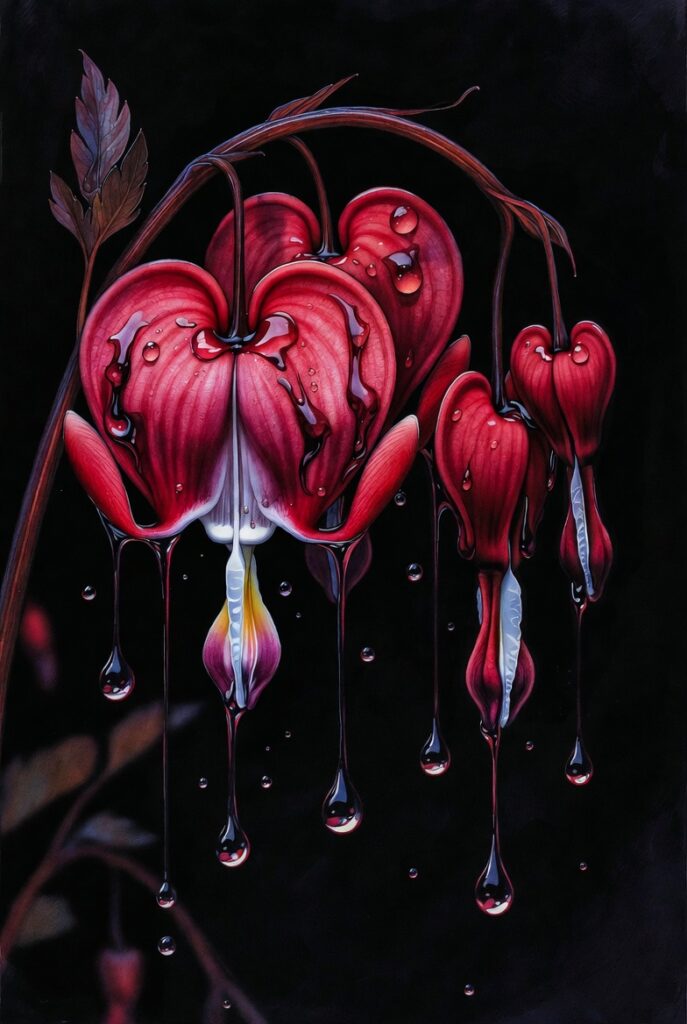
The bleeding heart flower naturally looks like tiny pink hearts with a drop beneath. In noir style, transform it into a black‑and‑gray mourning charm. Draw a stem with several heart‑shaped blooms, but make the hearts almost skeletal—each one outlined in black with internal shading that suggests hollow chambers. The “drop” at the bottom of each heart is elongated into a thick, slow drip of black ink that pools on the ground below. Add a few wilted leaves that have curled into claw‑like shapes. Use soft smudging for the drips to make them look wet. Place this on the ribs, collarbone, or the side of the hand. The name alone fits noir perfectly, and the imagery doubles down on themes of loss, secret love, and beautiful suffering.
Ivy Climbing a Broken Streetlamp
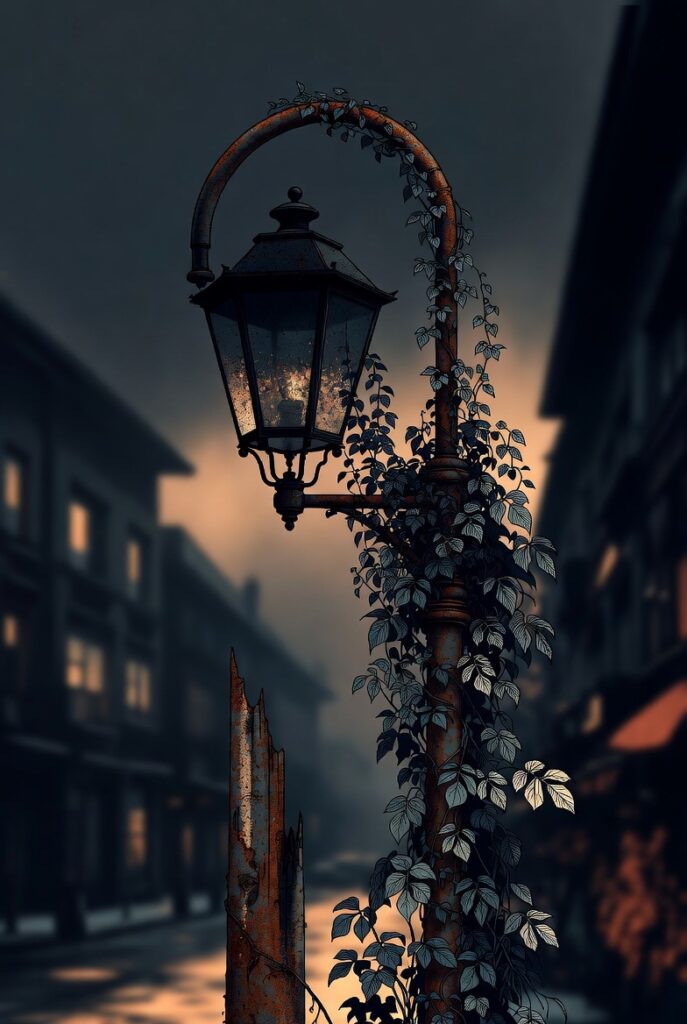
Take a classic noir image—a broken streetlamp on a deserted street—and weave ivy through it. The streetlamp’s glass is shattered, the metal frame bent and rusted, and from the ground, thick ivy vines climb up the pole, entering the lamp housing and spilling out through the broken glass. The leaves should be dense and dark, with some overlapping to create almost solid black shapes. The lamp itself is shaded with rough, scratchy lines to suggest years of neglect. No street, no sky—just the lamp and the ivy against a black background. This tattoo works as a vertical piece on the thigh, upper arm, or along the spine. It captures the noir themes of urban decay and nature’s quiet invasion, like a scene from a black‑and‑white film that no one is left to watch.
Dandelion Seeds Blowing into a Void
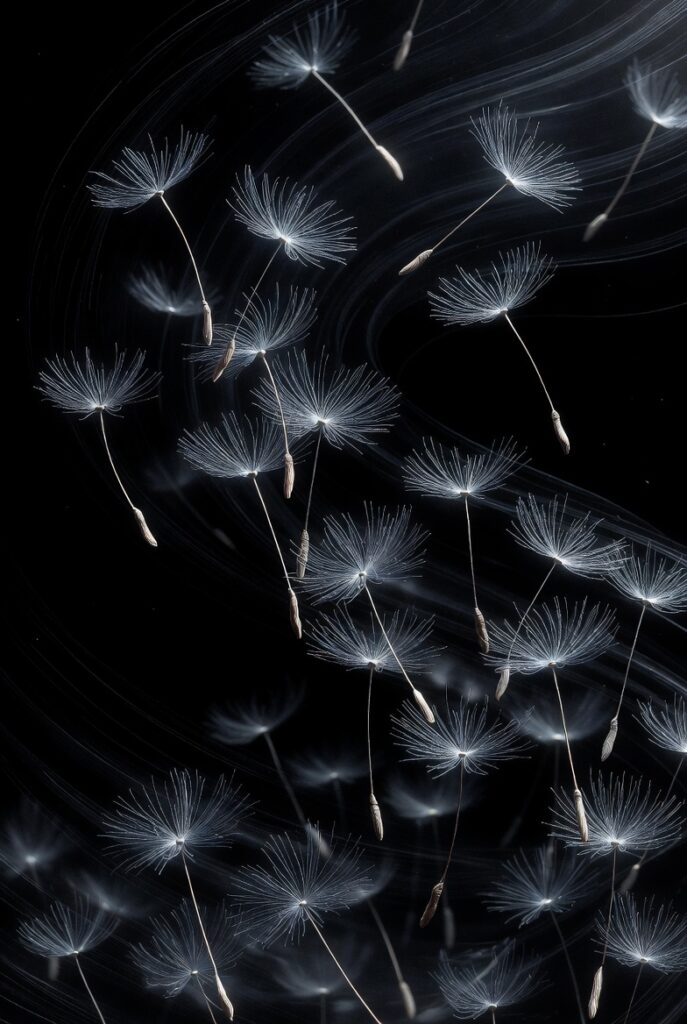
A dandelion puffball at the moment of dispersal becomes a meditation on loss and drift. Draw the round seed head as a delicate lattice of thin lines, with half the seeds already blown away into pure blackness. The remaining seeds cling to the center, while the floating ones are shown as tiny parachutes fading into a dark gradient. The stem bends in a soft curve, and the leaves at the base are ragged and torn. Use fine single‑needle lines for the seeds and a heavy wash for the void they disappear into. This design is perfect for the wrist, ankle, or behind the ear—smaller spaces where the fine details can shine. It’s a quiet, almost gentle noir idea, focusing on impermanence and the courage to let go.
Cactus with Barbed Shadows
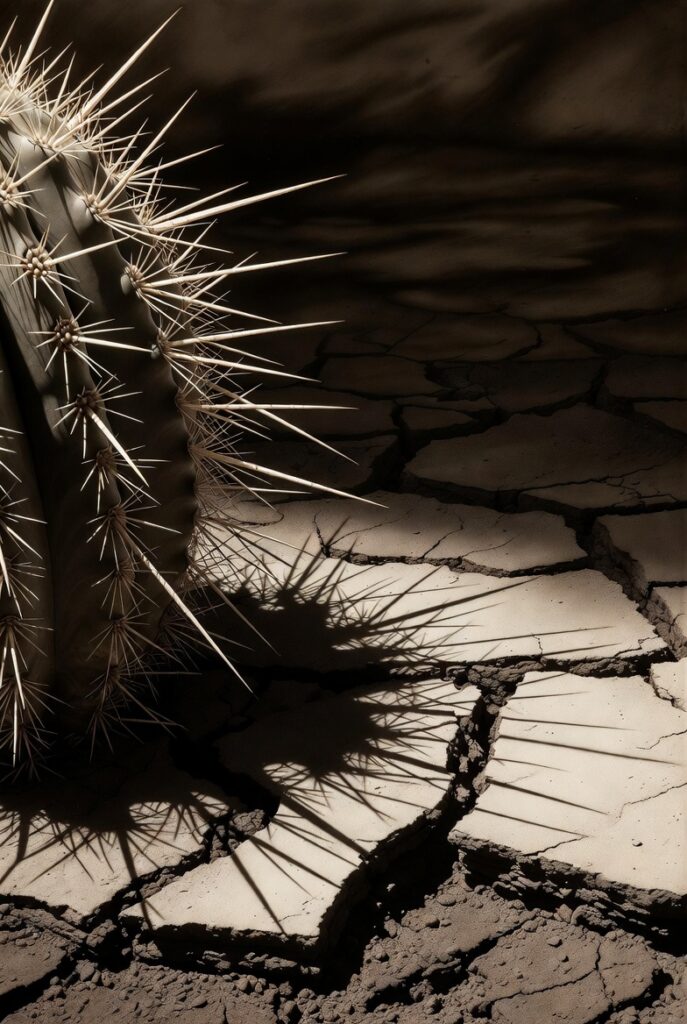
A saguaro cactus might seem out of place in noir, but imagine it at night under a sliver of moon. The cactus is tall and ribbed, with one arm broken off and lying on the ground. The shadows it casts are not normal—they extend in sharp, barbed shapes that look like prison bars or skeletal fingers. Use hard edges and stark contrasts to define the cactus itself, then blur the shadows slightly to make them feel menacing. Add a single, dark flower blooming from the top, but its petals are withered before they even open. This tattoo works well on the front of the shin or along the outer arm. It subverts the cheerful desert icon into something lonely, resilient, and slightly sinister.
Dead Leaf Veins Only
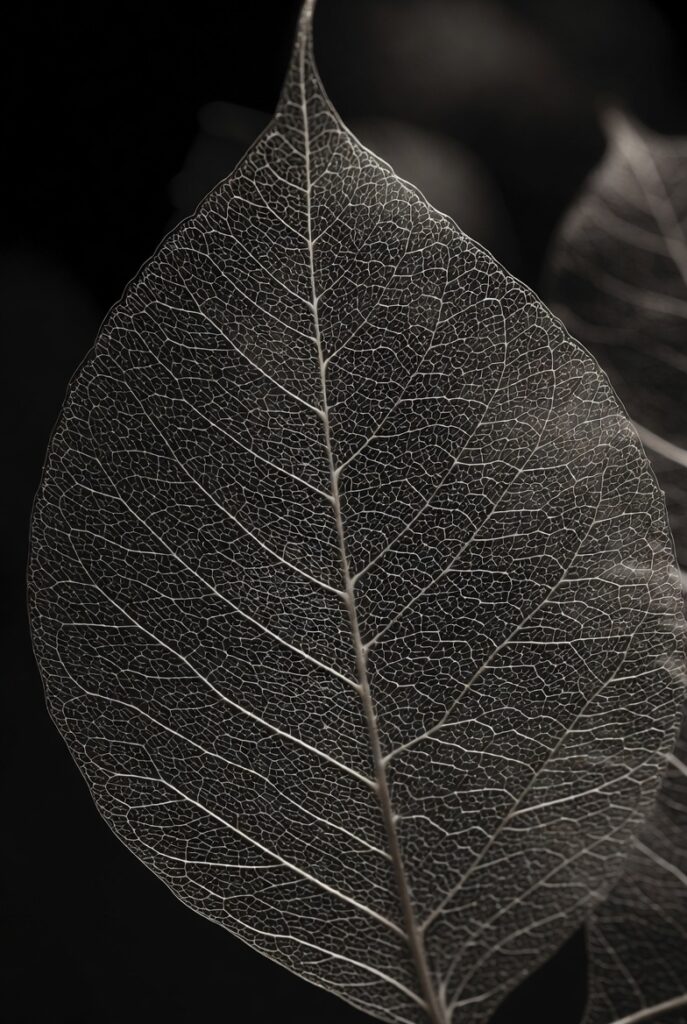
This idea is minimal but powerful: no entire leaf, just its veins. Draw the intricate network of veins from a large fallen leaf—oak or maple—but leave out the flesh of the leaf entirely. The veins should be thick black lines that taper to thin threads, branching out like a map of lost roads. A few tiny holes (where the leaf tissue used to be) are scattered throughout. At the stem end, a single drop of black sap hangs. No background, no other elements. This tattoo is pure linework, almost like a botanical X‑ray. Place it on the inner forearm, the back of the neck, or the finger. It’s subtle but deeply noir in its obsession with structure, absence, and the ghost of what once was alive.
Black Rose Enclosed in a Glass Dome
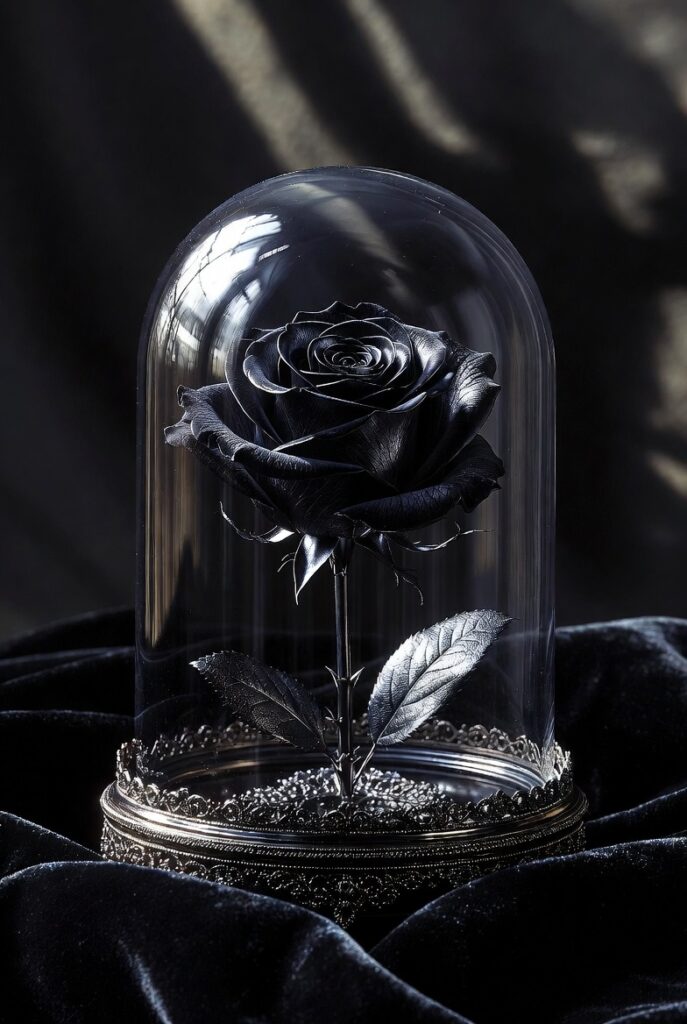
The final idea returns to the rose but with a twist: a black rose preserved under a dusty glass dome. The rose is fully opened but each petal has a dark, bruised edge. Inside the dome, a few dead petals have fallen to the base, and a single cobweb stretches from the stem to the glass. The dome itself is rendered with reflective highlights and faint cracks, and the wooden base is carved with a single word in an antique font: “Never.” Use a mix of smooth gradients for the glass and rough textures for the wood. This tattoo fits beautifully on the outer thigh, the shoulder, or the chest. It encapsulates the entire botanical noir aesthetic—beauty trapped in time, adored but untouchable, elegant and heartbreaking all at once.
Conclusion
Botanical noir tattoo ideas invite you to explore nature’s shadowed corridors—where flowers mourn, thorns guard secrets, and every leaf tells a story of decay or resilience. These 22 designs offer a range of moods, from the whisper‑thin melancholy of a ghost pipe to the brutal poetry of a wilted sunflower. Work with an artist who understands high‑contrast blackwork, fine stippling, and negative space to bring these concepts to life. Whether you choose a single small piece or a full sleeve, each tattoo becomes a wearable piece of dark elegance, turning your skin into a gallery of nature’s most mysterious moments.

Mehboob Ahmad is the founder and writer behind BeautyVibeWorld. With a genuine passion for skincare, makeup, and everyday beauty routines, Mehboob started this platform to share simple, practical, and research-backed advice that real people can actually use without the confusion of conflicting trends and overhyped products.
Every article on BeautyVibeWorld is written with care, backed by research, and regularly updated to stay accurate and relevant. Mehboob believes good beauty advice should be honest, easy to follow, and free of unnecessary complexity.
Outside of writing, Mehboob enjoys exploring new beauty trends and staying up to date with the latest in skincare and haircare research to keep bringing fresh, reliable content to BeautyVibeWorld readers.