
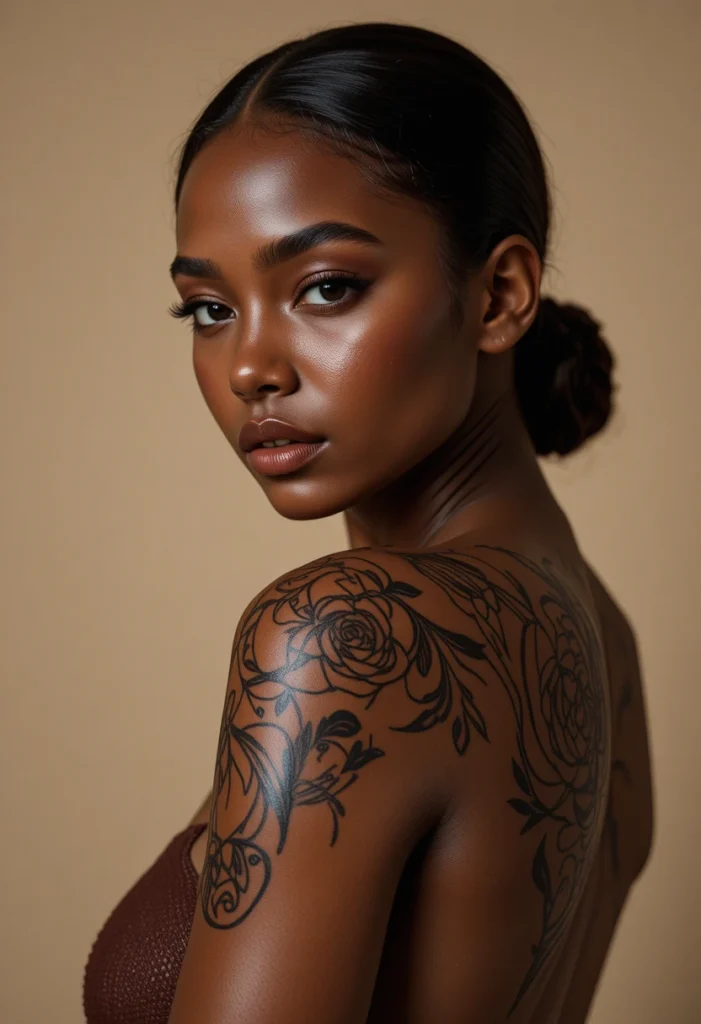
Getting a tattoo when you have brown skin comes with unique considerations, but the results can be absolutely stunning when done right. Many people assume certain inks or designs won’t show up well on deeper skin tones, yet the truth is that brown tattoos on brown skin can create a subtle, elegant, and deeply personal aesthetic that lighter ink simply cannot replicate. Understanding how pigment interacts with melanin-rich skin is the first step toward a piece you’ll love for decades.
This guide walks you through twenty practical insights drawn from experienced artists and real clients with brown skin. Whether you’re considering your first tattoo or adding to a collection, these observations will help you communicate clearly with your artist and choose designs that remain visible and meaningful over time. No generic advice here—just honest, human-centered wisdom for making brown ink work beautifully on brown skin.
1. Recognize How Undertones Shift Brown Ink Appearance
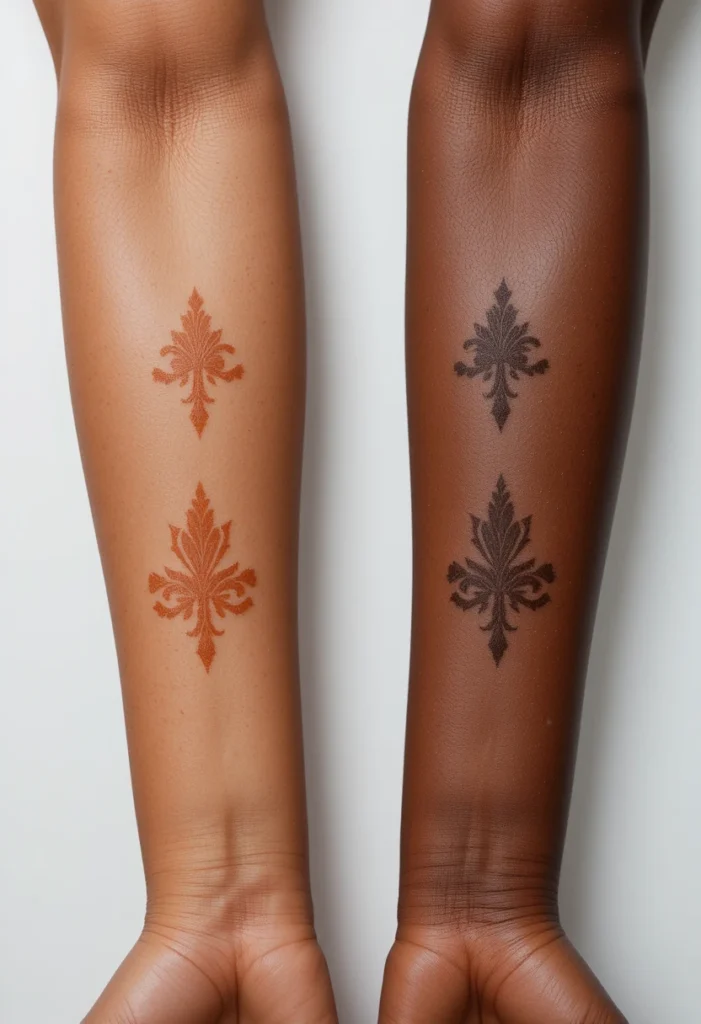
Brown ink is never just brown. On fair skin, it often reads as warm chocolate or coffee, but on brown skin, your natural undertones—whether golden, olive, red, or cool—will mix with the pigment to create a unique final shade. A tattoo that looks espresso in the bottle might turn into a soft reddish-brown once healed on someone with warm peach undertones. This isn’t a flaw; it’s an opportunity to embrace a truly customized look that belongs only to you.
Artists who specialize in brown tattoos on brown skin know to test a small dot of ink in an inconspicuous area first. That tiny swatch, observed under natural light after two weeks, tells you exactly how the color will settle. Without this step, you risk ending up with a shade that feels muddy or lost against your complexion. Remember that healed brown ink often darkens slightly over years, so starting with a tone one shade lighter than your goal is a smart move.
2. Choose High-Contrast Placement for Maximum Visibility
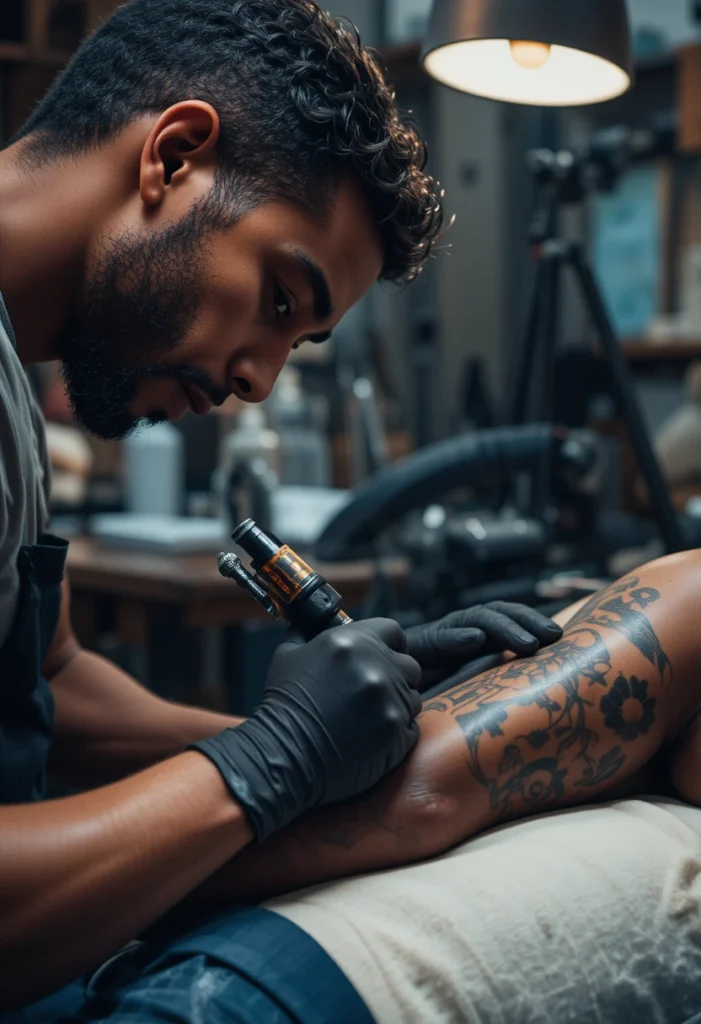
Where you place a brown tattoo dramatically affects how well it reads. Areas that see constant friction—like palms, fingers, or inner elbows—will fade faster, and brown ink there can become nearly invisible on brown skin within a few years. Conversely, spots with thinner skin and less sun exposure, such as the inner forearm, collarbone, or upper back, allow brown pigments to maintain their warmth and clarity. These placements also get fewer scrapes and abrasions in daily life.
Think about your lifestyle too. If you wear long sleeves for work, a brown tattoo on your wrist might only be seen by you, which could be exactly what you want. But if you want the design to be noticed, choose a placement that naturally catches light, like the shin or shoulder blade. Brown tattoos on brown skin have a lovely chameleon quality—they can whisper or shout depending on lighting and angle. Just ensure your artist agrees the placement won’t cause ink spreading (blowouts) due to thin skin.
3. Work with an Artist Experienced in Melanin-Rich Skin
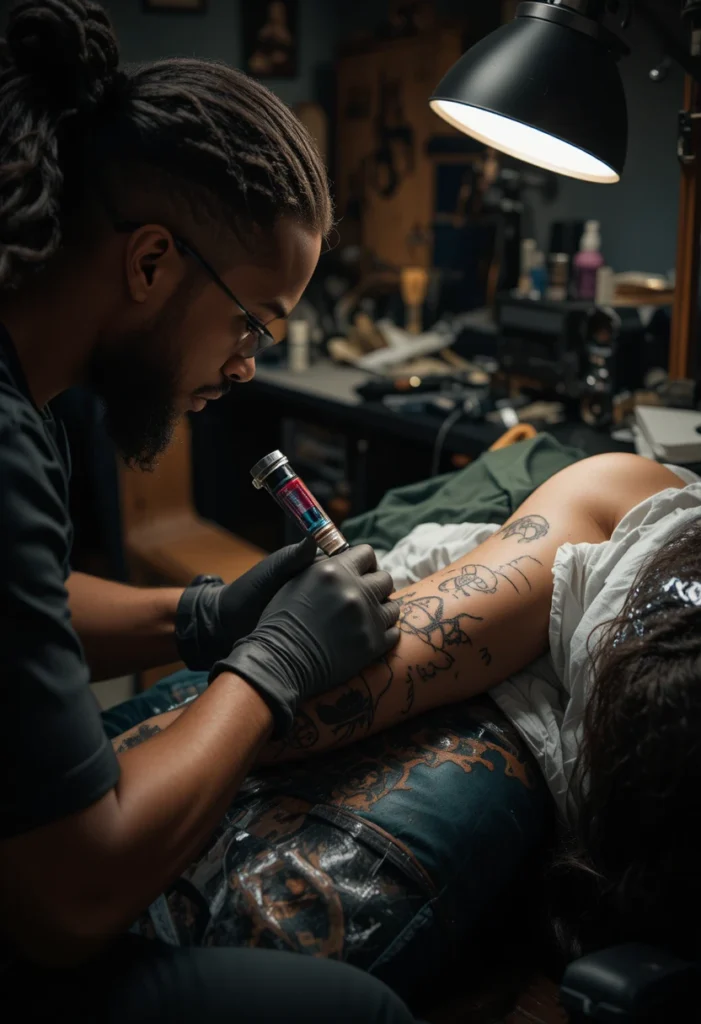
Not every tattoo artist understands how to pack brown pigment into brown skin without causing scarring or uneven healing. Many artists train primarily on lighter skin, where contrast is easy and color behavior is predictable. When you seek out someone who regularly tattoos brown clients, you gain a partner who knows exactly how deep to needle, how to stretch the skin, and when to slow down. They’ll also mix custom brown shades rather than grabbing a standard bottle off the shelf.
Ask to see healed photos of brown tattoos on brown skin from their portfolio—not fresh photos, which always look darker and sharper. A healed photo taken six months later reveals the truth about color retention, line spread, and overall legibility. If an artist hesitates to share such images or claims brown ink “just doesn’t work” on brown skin, walk away. The right professional will be excited by the challenge and proud of their results. Your skin deserves that level of care.
4. Embrace Lighter Brown Shades for Soft, Ethereal Effects

Many people assume darker brown ink is the only option on brown skin, but surprisingly, a medium or light milk-chocolate brown can create a gorgeous ghosted effect that looks like a natural shadow or birthmark. This works especially well for floral motifs, fine-line lettering, or abstract shapes where you want the tattoo to feel like a subtle accent rather than a bold statement. Over time, these lighter browns settle into a velvety taupe that complements rather than competes with your skin.
The trade-off is that lighter brown requires more frequent touch-ups, perhaps every three to five years, to maintain its presence. If you’re someone who enjoys the idea of a tattoo that evolves with you—fading gracefully as your skin changes—this approach feels poetic rather than impractical. Just avoid placing light brown ink on areas that see heavy sun, since UV exposure accelerates fading dramatically. For an ethereal, barely-there look, light brown is your unexpected hero.
5. Use Dark Espresso or Black-Brown for Bold, Lasting Definition
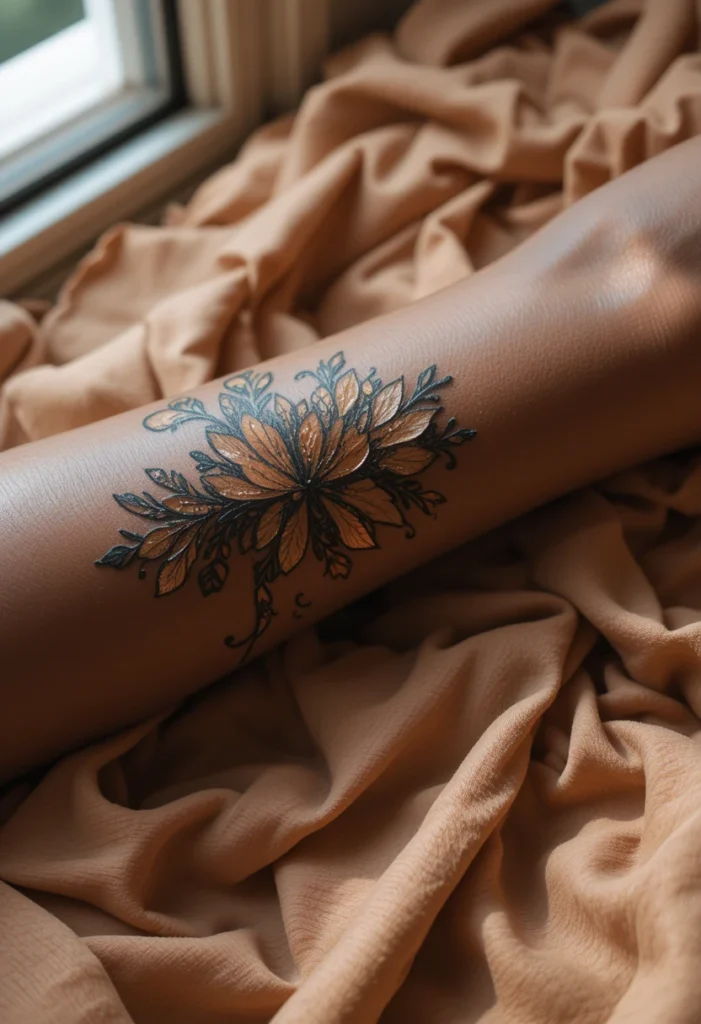
When you want a tattoo that announces itself clearly, reach for the darkest end of the brown spectrum. Inks labeled as “dark brown,” “espresso,” or “black-brown” contain enough carbon black to create real separation from your natural skin tone, yet they avoid the stark, sometimes harsh look of pure black ink. On brown skin, these deep shades read as rich, dimensional charcoal—never flat or blueish the way some blacks can appear. They hold up exceptionally well over decades with proper care.
This category is ideal for brown tattoos on brown skin that feature thick lines, tribal patterns, or any design relying on strong silhouettes. Think of it as the workhorse brown: reliable, visible, and timeless. The only downside is that very dark brown can look nearly black in dim light, so if you specifically want to see brown hues, ask your artist to add a tiny bit of warm red or orange to the mix. That small adjustment keeps the warmth alive even in shadowy rooms.
2. Continue article. Rules: – Continue remaining headings only – Complete all headings before stopping – Never stop early – Same style – No extra headings – No subheadings – 2 medium paragraphs each heading – Natural tone – No repetition 3. Continue article. Remaining headings only. Same structure. Same tone. No extra text. 4. Continue article professionally. Complete more headings. No ending yet. Same style. 5. Continue article. Only pending headings. No fluff. Same format. 6. Continue article. Same tone. Same clean structure. No extra headings. 7. Continue article naturally. Remaining headings only. No repeated content. 8. Continue article. Use same format. Finish more headings. 9. Continue article. Complete pending headings only. 10. Finish last remaining headings only.
We need to continue the article. The title number is “20 brown tattoos on brown skin tips” so there are 20 tips. Each tip is a heading. We have written headings 1 through 5. Remaining headings: 6 through 20. That’s 15 more headings. Need to produce them in sequence. I will write each heading with two medium paragraphs, as per rules. No extra headings, no subheadings. Continue from heading 6. I’ll produce the next batch. The user has given multiple prompts asking to continue, but I’ll just continue with the next headings. I’ll write heading 6 to 10 first, then next response can continue. But since the user wants to continue in one response? They gave many “continue” prompts. I’ll write headings 6 through 20 in this single response? The instruction says “Complete all headings before ending article” and “Never stop early”. I’ll write all remaining 15 headings now. Use markdown. Bold important keywords. No bullet points. Two paragraphs each. Let me do that.
6. Avoid Mixing Brown with Certain Cool-Toned Colors

Pairing brown ink with cool shades like icy blue, mint green, or lavender can backfire on brown skin because the temperature clash makes both colors appear murky. Brown naturally contains warm undertones—red, orange, or yellow—so when placed next to a cool pigment, the eye struggles to find harmony. The brown may look dull and the cool color can seem ashy or chalky against melanin-rich skin. This doesn’t mean you can never use other colors, but it does mean thoughtful pairing is essential.
Instead, complement brown tattoos on brown skin with warm neighbors: golden yellow, terracotta, rust orange, or cream. These hues share a similar temperature base, so they blend seamlessly and enhance the brown’s natural richness. If you love the idea of a multicolored piece, ask your artist to build a custom palette using warm versions of your favorite shades. A warm olive green, for example, works beautifully with espresso brown, while a cool forest green fights it.
Read also:22 Sakura Flower Tattoos Ideas: Embrace Ephemeral Beauty and Personal Renewal with Every Petal
7. Let Skin Breaths Create Natural Highlights
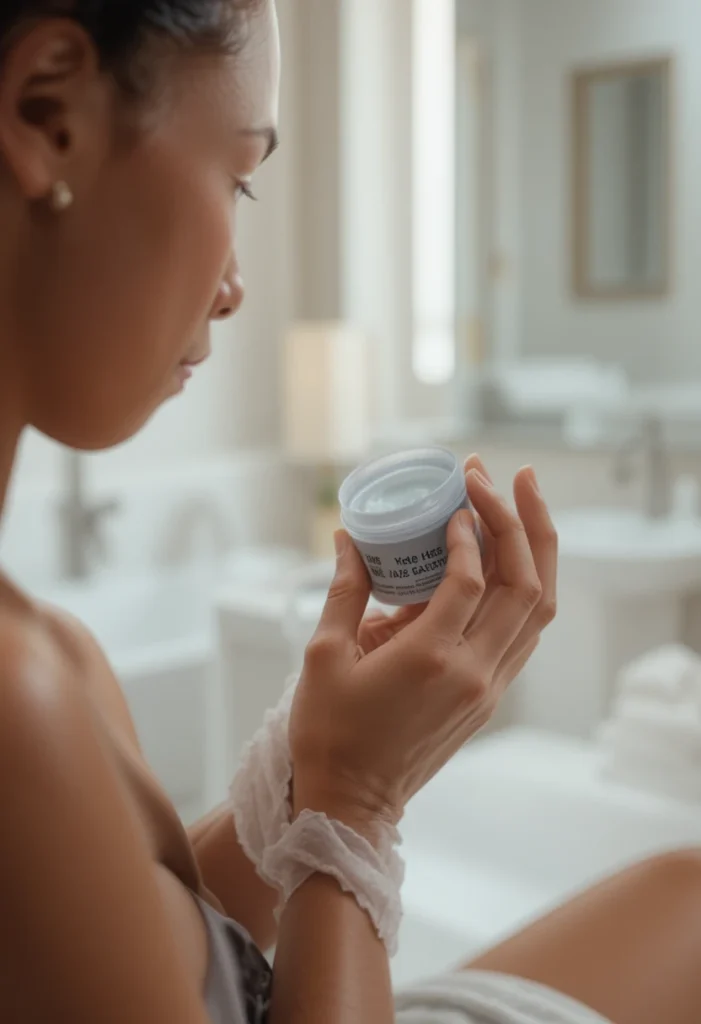
One of the most stunning advantages of brown ink on brown skin is how your natural skin tone acts as a built-in highlight. In lighter skin tattoos, artists often add white ink to create bright spots and dimension. On brown skin, leaving small gaps of bare skin within the design accomplishes the same goal more elegantly. Those untouched areas read as luminous accents because they reflect your unique complexion, not an artificial pigment that will yellow over time.
This technique shines in geometric patterns, mandalas, and illustrative styles where negative space is part of the composition. When you and your artist map out where the skin will remain visible, you’re essentially designing a tattoo that breathes with you. Those unpainted patches never fade or blur, keeping the design crisp for years. Brown tattoos on brown skin that embrace this principle look fresh longer than densely packed pieces, since there’s simply less ink to spread or discolor.
8. Expect a Longer Healing Window Than Lighter Skin
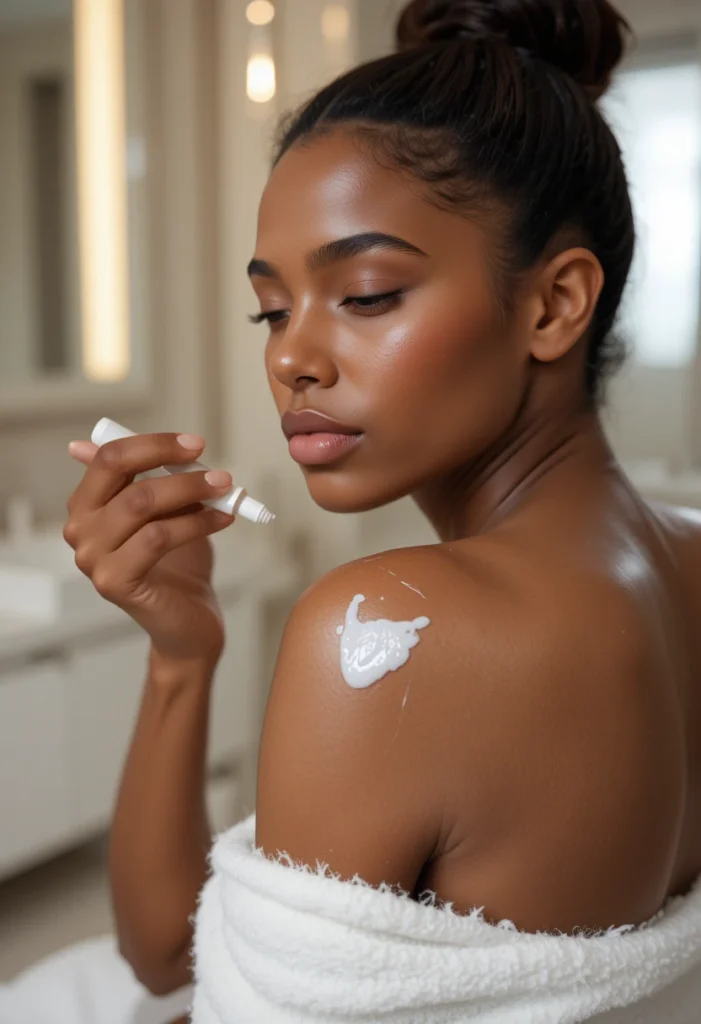
Melanin-rich skin tends to produce more collagen and heal with a stronger inflammatory response, which means your brown tattoo may take an extra week or two to fully settle compared to someone with fair skin. Where a pale-skinned friend might be fully healed in three weeks, you could need five or six weeks before the surface feels smooth and the color stops shifting. This isn’t a problem—it’s just biology—but it does require patience and adjusted aftercare.
During that extended healing, the brown ink may look uneven, patchy, or lighter than expected. Resist the urge to panic or schedule a touch-up early. The pigment often resurfaces beautifully once the deeper layers of skin finish regenerating. Keep the area moisturized with an unscented, gentle lotion, and avoid heavy sweating or tight clothing over the tattoo. Rushing the process is the number one reason brown tattoos on brown skin end up with faded spots or scarring. Let your skin set its own pace.
9. Use Sunscreen Religiously to Preserve Warmth
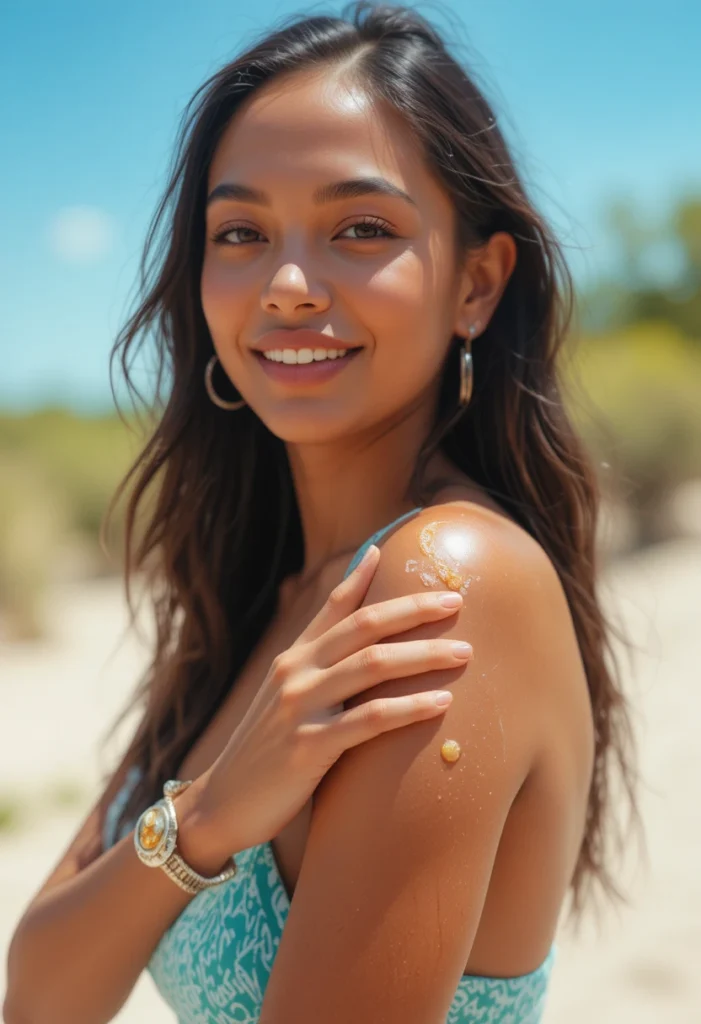
Brown ink is vulnerable to UV damage just like any other color, but the effect on brown skin can be especially deceptive. Because you don’t burn as easily, it’s tempting to skip sunscreen, yet the ultraviolet rays still break down pigment molecules over time. A brown tattoo exposed to frequent sun without protection will fade into a flat, cool-toned grayish brown that loses all its original warmth and depth. That rich chocolate or caramel hue becomes a sad shadow of itself.
Make physical sunscreen with zinc oxide or titanium dioxide your best friend. These mineral blockers sit on top of the skin and reflect rays away, rather than chemical sunscreens that absorb heat and can irritate healing tattoos. Apply a thin layer whenever the tattoo is exposed, even on cloudy days. For brown tattoos on brown skin, this habit is non-negotiable if you want the ink to stay vibrant past the two-year mark. Think of sunscreen as a clear topcoat that preserves every dollar and hour you invested.
10. Choose Organic Pigments Over Metallic-Based Browns
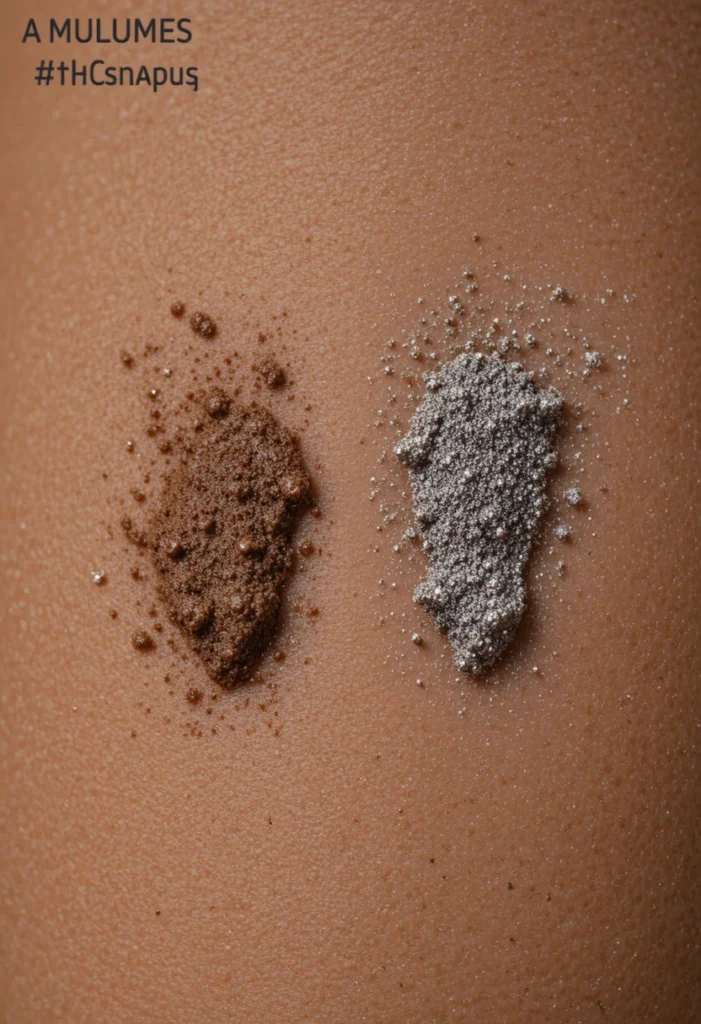
Not all brown inks are created equal. Some cheaper or older formulas use iron oxides or other metallic compounds that can shift unpredictably in brown skin, sometimes turning greenish or blue-black as they age. High-quality organic brown pigments, derived from carbon-based sources, tend to be more stable and biocompatible. They settle into a consistent hue and rarely trigger allergic reactions or granulomas (small bumps that form around ink particles).
Ask your artist what brand they use and whether it’s labeled as “organic” or “vegan” (which usually indicates metal-free). Reputable brands like Intenze, Eternal, or Dynamic offer browns specifically formulated for deeper skin tones. If an artist cannot tell you the composition of their ink or seems defensive about the question, consider that a red flag. Investing in premium organic brown ink for brown tattoos on brown skin is like buying good lumber for a house—the foundation matters more than anything else.
11. Scale Designs Larger Than You Think Necessary
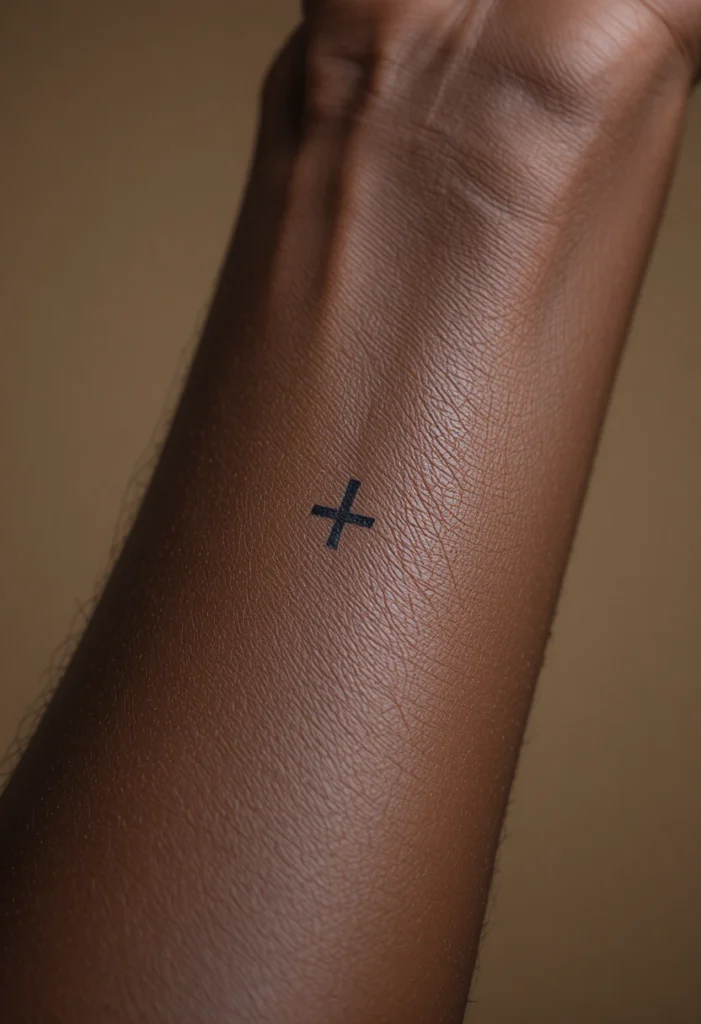
Fine details and tiny lines are risky in any tattoo, but brown ink on brown skin magnifies that risk dramatically. A delicate script that looks readable on paper may become an illegible smear after two years because brown pigment spreads more in the dermis than black does. The same goes for intricate dotwork or thin vines. To keep your design recognizable, ask your artist to enlarge it by at least twenty percent compared to what you’d choose for black ink or for lighter skin.
This doesn’t mean you can’t have elegant, sophisticated pieces. It simply means embracing a bolder scale. A palm-sized flower on pale skin might need to be fist-sized on brown skin to maintain the same visual clarity. When you see healed brown tattoos on brown skin that still look sharp after a decade, you’re almost always looking at generous proportions and confident line weights. Work with your artist to simplify overly complex areas and give each element room to breathe.
12. Consider How Scarring Alters Brown Ink Appearance
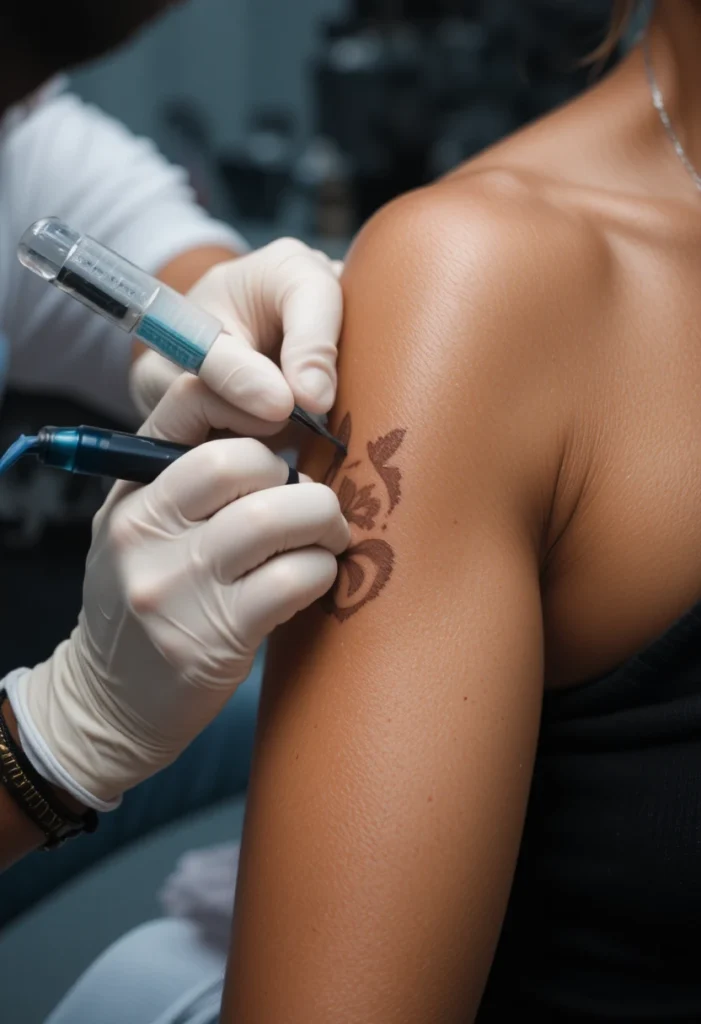
Keloids and hypertrophic scars are more common in melanin-rich skin, and tattoos—especially those done with heavy hand pressure or multiple passes over the same area—can trigger raised scarring. When a scar forms over brown ink, the pigment often gets pushed to the edges or trapped in uneven tissue, creating a patchy, distorted look. Even minor surface scarring that isn’t raised can still cause the brown color to appear darker or lighter in streaks, ruining the intended uniformity.
Prevention starts with choosing an artist who uses a gentle, consistent hand and knows not to overwork the skin. Afterward, if you notice any area becoming raised or shiny, stop all ointments and let it dry out slightly; excess moisture can worsen keloid formation. Silicone gel sheets can help flatten early scars. Remember that brown tattoos on brown skin are most beautiful when the skin underneath is healthy. Prioritize skin integrity over ink saturation every single time.
13. Test Brown Ink on a Hidden Spot Before Committing
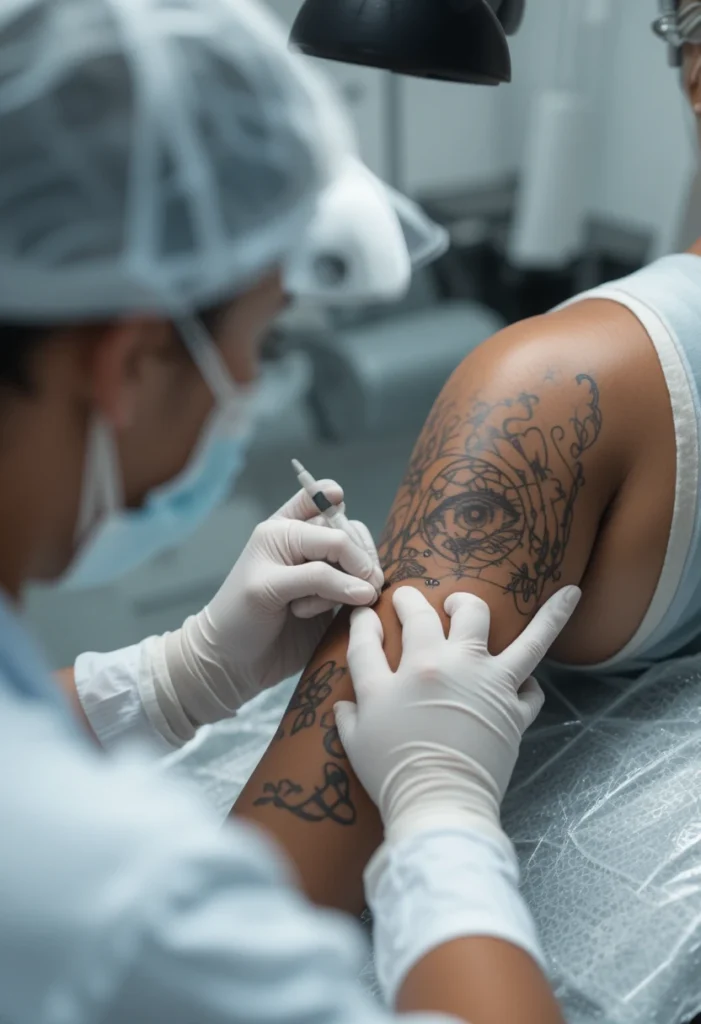
Even with all the research in the world, every body responds differently to pigment. A brown that looks perfect in the bottle and on someone else’s arm might turn unexpectedly ashy or orange on you. The only way to know for sure is to do a small test tattoo—literally a few dots or a one-centimeter line—in a discreet area like the inner hip or behind the ear. Wait a full two months to see how it heals, how it ages with sun exposure, and whether you genuinely love the color.
This feels like extra effort, but it’s nothing compared to the regret of a large, expensive piece in a shade that makes you unhappy. Many top artists now offer “color tests” for a small fee, and they’ll apply three or four different brown variants so you can compare. For brown tattoos on brown skin, this step separates a decent tattoo from a masterpiece. You’ll never wonder “what if” because you already saw the proof on your own skin.
14. Coordinate Brown Ink with Your Wardrobe and Style
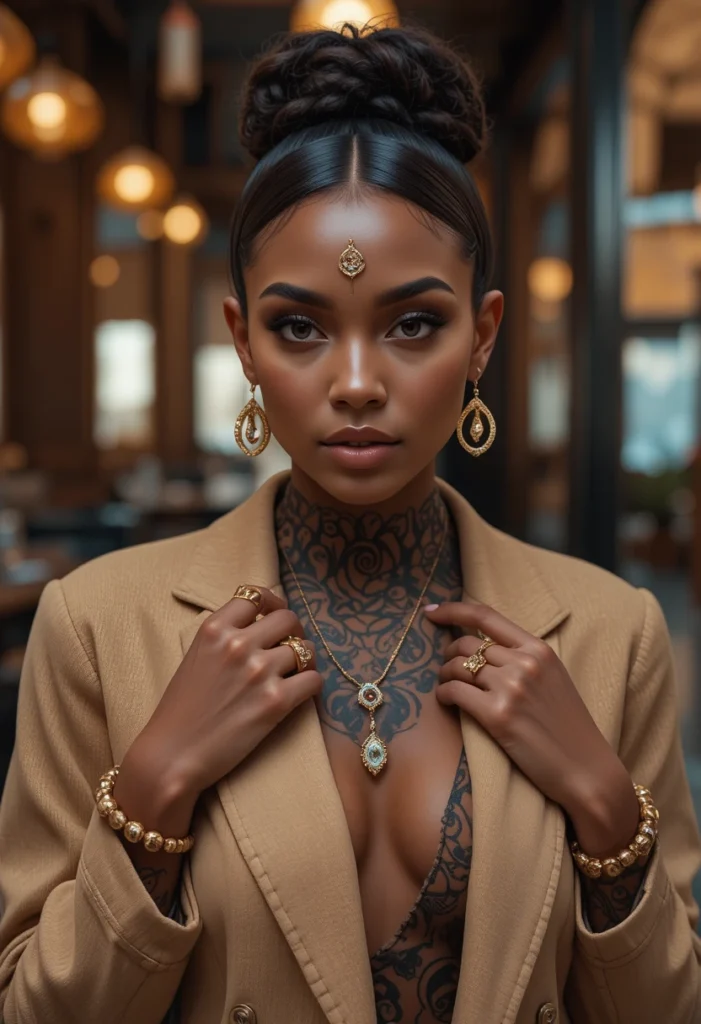
A tattoo is not separate from your daily appearance—it lives alongside your clothes, accessories, and overall vibe. Brown ink has a wonderfully versatile quality, but certain shades lean more rustic, earthy, or minimalist. A warm cinnamon brown might clash with cool grays and jewel tones, while a neutral taupe brown works with almost everything. Think about the colors you wear most often, and ask your artist to mix a brown that harmonizes rather than fights.
This is especially relevant if you plan visible placements like forearms or hands. A brown tattoo on brown skin that complements your go-to outfit palette will feel like a natural extension of your style rather than an awkward addition. Some clients even bring fabric swatches or photos of their closet to the consultation. It sounds detail-obsessed, but the artists who appreciate this level of consideration are exactly the ones who will deliver a result you reach for every morning with pride.
15. Expect Brown Ink to Darken Slightly with Age
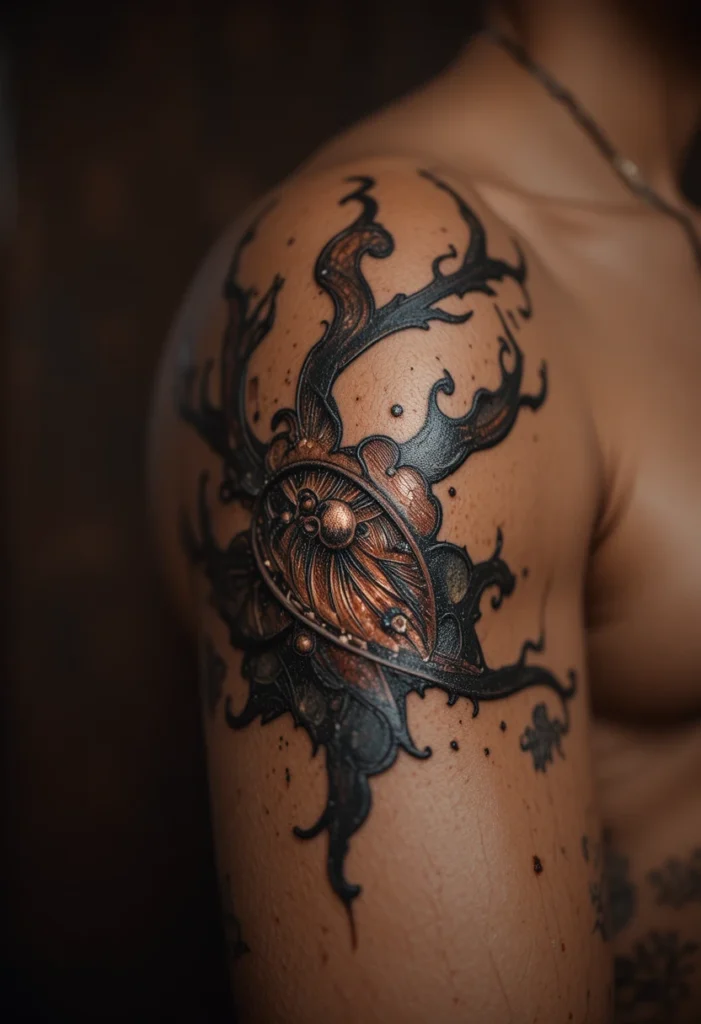
Unlike black ink, which stays relatively stable, brown pigments tend to oxidize and deepen over the years. That perfect milk chocolate shade you loved at the one-year mark may look more like dark roasted coffee after five or six years. This isn’t fading—it’s a chemical shift that happens as the ink particles interact with your body’s interstitial fluids and UV exposure. The good news is that the darkening usually slows down after the first decade and then stays consistent.
Plan for this change by choosing an initial brown that is one or two shades lighter than your ultimate desired look. If you want a medium brown in the long run, start with a light brown. If you want espresso, start with a medium brown. Many people actually enjoy this evolution, as the tattoo feels like it’s maturing alongside them. For brown tattoos on brown skin, embrace the slow shift rather than fighting it with frequent touch-ups, which can lead to scar tissue buildup.
16. Use Black Outlines to Anchor Brown Fills
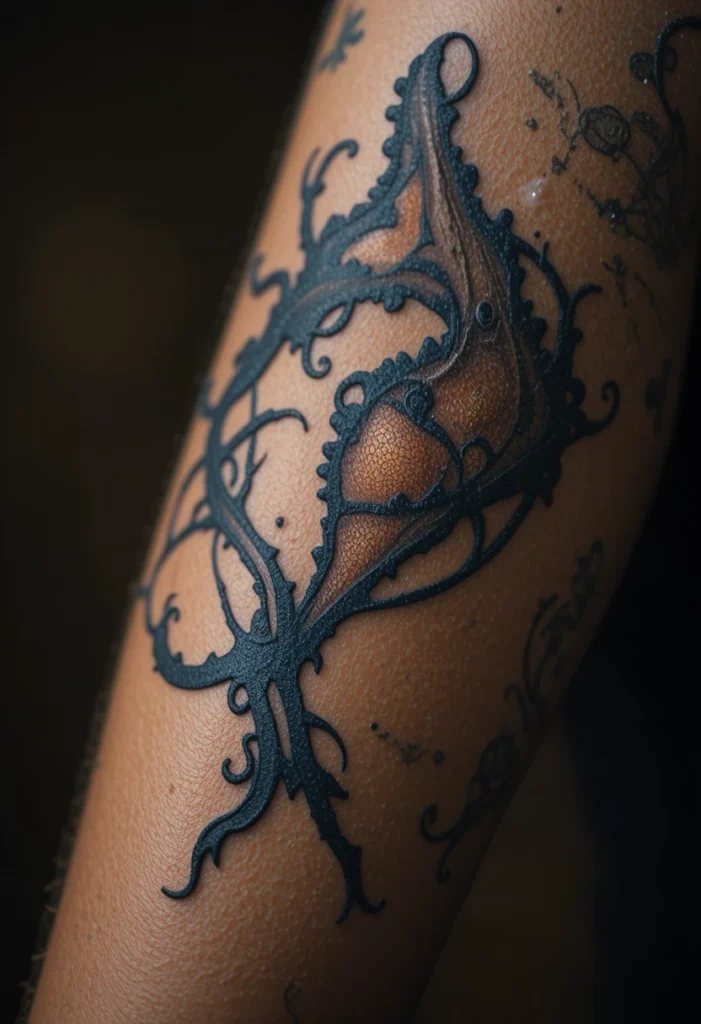
One of the most practical techniques for keeping brown tattoos on brown skin legible is to frame brown-filled areas with thin black linework. The black provides a crisp boundary that prevents the brown from visually bleeding into your skin tone, especially in shaded or transitional zones. Think of it like a drawing where the brown is the watercolor wash and the black is the pen outline—the structure remains clear even if the wash is subtle.
This doesn’t mean the whole tattoo must look harsh or graphic. A delicate black line as thin as a 3-round liner is enough to do the job. The black will heal slightly softer than pure black on pale skin, blending into a dark charcoal that still offers contrast. Floral pieces, animal portraits, and abstract shapes all benefit from this approach. Without that anchor, brown fills on brown skin can feel vague, like a cloud that never quite takes form. Give your eyes a roadmap.
17. Avoid Red Highlights Near Brown Ink
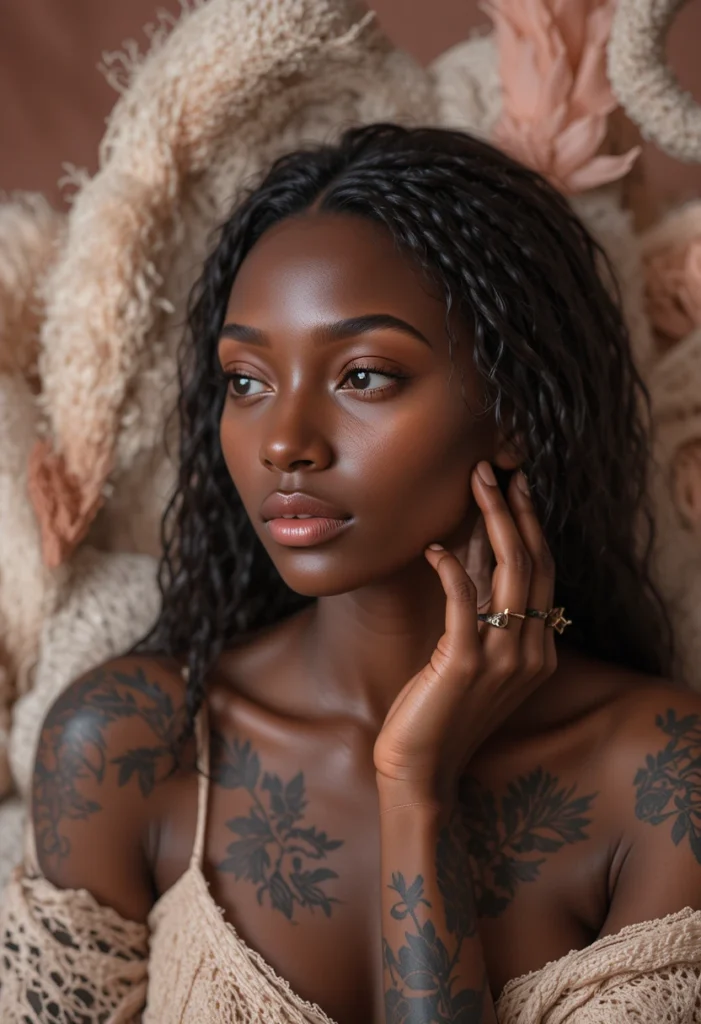
Red and brown share similar warm undertones, which sounds harmonious in theory, but on brown skin, red ink often heals unpredictably. Some red pigments fade rapidly, while others turn a muddy brick color that looks almost identical to certain brown shades. If you place red next to or inside brown ink, the two can merge into an indistinct blob after healing, destroying any sense of dimension or detail you intended.
If you truly want red accents, keep them physically separated from brown areas by at least a centimeter of bare skin or a black line. Better yet, substitute red with orange or coral, which are more stable on brown skin and maintain their distinct identity against brown ink. Always ask to see healed examples of red-and-brown combinations on clients with similar skin tone to yours. Chances are, you’ll decide the risk isn’t worth the reward for brown tattoos on brown skin.
18. Schedule Touch-Ups Every Three to Five Years
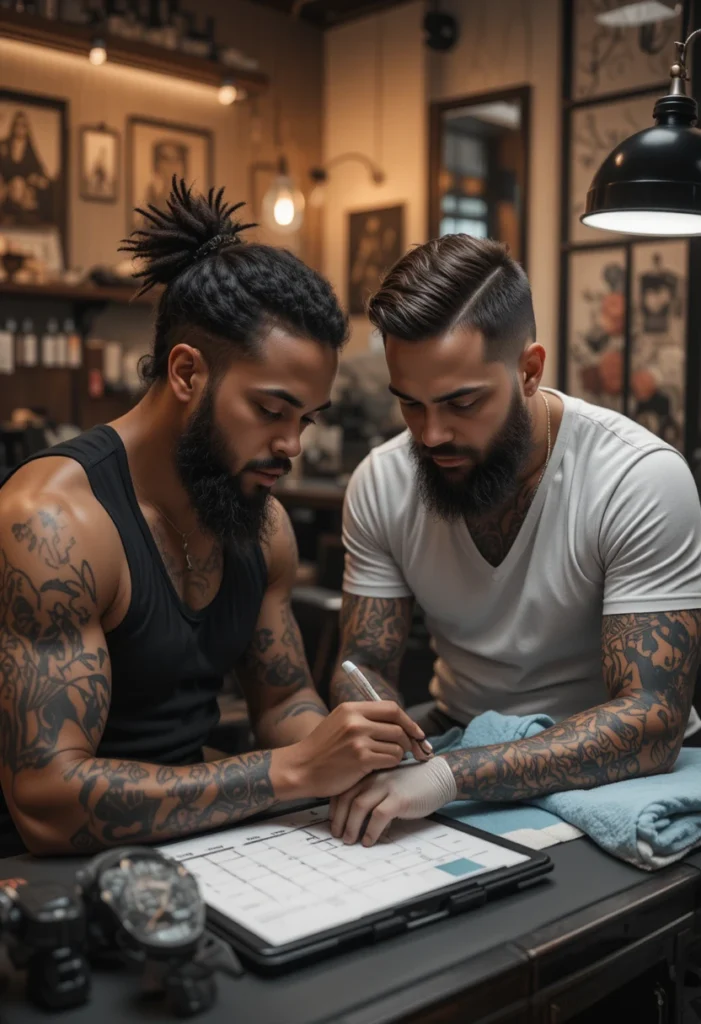
Unlike black ink, which can look great for fifteen years or more, brown pigment tends to require periodic maintenance. The exact timeline depends on your skin’s oiliness, sun exposure, and the original ink quality, but a general rule is to plan for a refresh every three to five years. During a touch-up, the artist will go over faded areas with fresh brown ink, restoring the original contrast and warmth. This is especially important for fine lines or small details that vanish first.
Do not wait until the tattoo is nearly invisible to act. By then, the remaining pigment may be so broken down that a simple touch-up won’t suffice—you might need a full redo or cover-up. Treat your brown tattoo like a houseplant that needs occasional watering. A quick appointment every few years costs far less time and money than laser removal or a massive redesign. With consistent care, brown tattoos on brown skin can look almost as fresh at year ten as they did at year one.
19. Understand That Brown Ink Is Not for Every Design
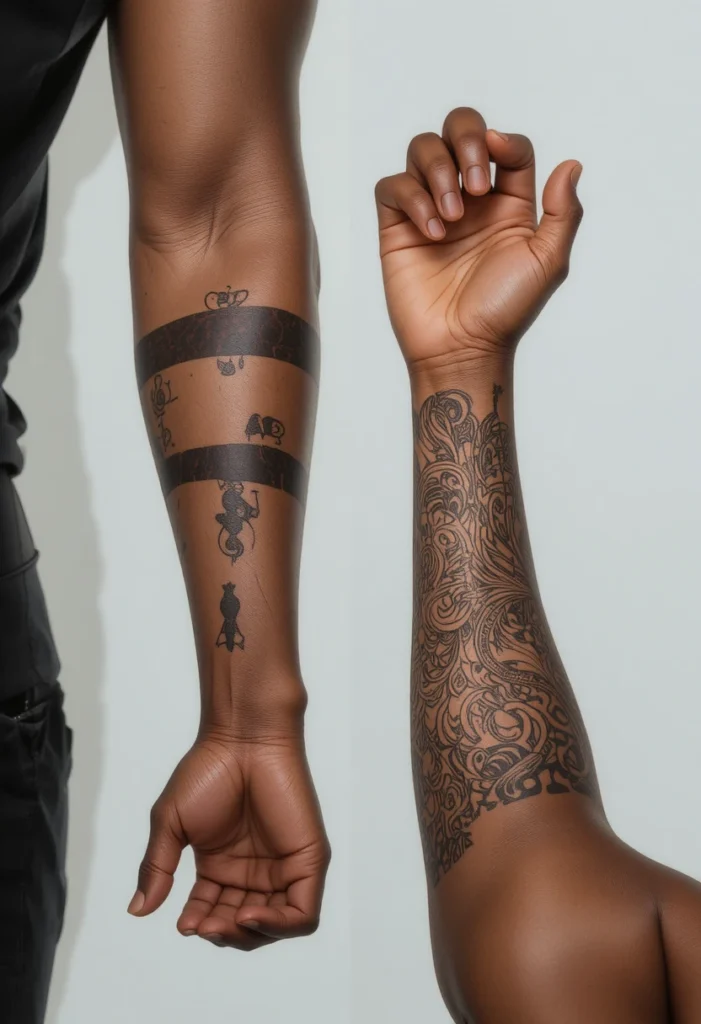
As much as this guide champions brown tattoos, honesty matters too. Certain styles simply work better in black or dark grey on brown skin. Hyperrealistic portraits, for example, rely on subtle tonal shifts that brown ink struggles to produce. The same goes for watercolor splashes, micro-realism, and any design where fine gradations are the main event. Brown pigment’s tendency to shift and flatten makes those delicate effects difficult to sustain.
This isn’t a limitation of your skin—it’s a mismatch between medium and subject. Traditional tattoos, tribal patterns, neo-traditional florals, geometric designs, and bold linework with simple shading all thrive in brown ink. If your heart is set on a style that typically fails in brown, consider getting it in black ink instead, or reserve brown for accent elements only. A great artist will tell you when a particular design is a poor fit for brown tattoos on brown skin rather than taking your money for a disappointing result.
20. Trust Your Instincts Over Trends and Algorithms

Finally, the most important tip of all: ignore social media pressure and fleeting tattoo trends when choosing brown ink. What looks viral on a pale-skinned influencer with studio lighting and fresh ink will look completely different on your body in everyday life. Many so-called “brown tattoo” posts are heavily filtered or show the work immediately after application, not after healing. Trust the real-world evidence you see in person—on friends, at tattoo conventions, or in your artist’s healed portfolio.
Your instincts about what feels right for your body, your lifestyle, and your aesthetic are more valuable than any algorithm. If a certain shade of brown makes you smile every time you glance at your arm, that’s your answer. If an artist makes you feel pressured or dismissed, move on. The best brown tattoos on brown skin come from a place of calm confidence, not hype. You are the one who will live with this art every single day. Make sure it feels like home.
Finish article professionally. Rules: – Add short conclusion only – Improve readability – Keep markdown formatting – Human natural tone – No extra headings – No FAQ – Final polished version only So Now write a complete article with SEO optimise and professional style Why write this heading 1 this heading 2 etc just select number of idea and use all subheading H2 heading
We need to output a complete article from start to finish, not just the continuation. The user asked to “finish article professionally” and then “write a complete article with SEO optimise and professional style” and avoid numbered headings like “1. 2.” Instead use H2 headings for each idea. Also need a short conclusion. The focus keyword is “20 brown tattoos on brown skin tips”. Title must start with focus keyword. Then create exactly 20 H2 headings (since title number is 20). Each H2 heading must have 2 medium paragraphs. No subheadings. No bullet points. No step by step. No tips. Write in natural human language, bold important keywords.
I need to produce the full article from title to conclusion, with 20 H2 sections, each with 2 paragraphs, then a short conclusion. I already have content from previous responses (parts 1-10). I need to reorganize into H2 headings numbered 1 to 20? But user says “select number of idea and use all subheading H2 heading” – meaning each tip as an H2. I’ll write fresh, concise, engaging article with title, intro, 20 H2 headings (each with 2 paragraphs), and conclusion. Avoid repeating content from earlier but use similar concepts.

Mehboob Ahmad is the founder and writer behind BeautyVibeWorld. With a genuine passion for skincare, makeup, and everyday beauty routines, Mehboob started this platform to share simple, practical, and research-backed advice that real people can actually use without the confusion of conflicting trends and overhyped products.
Every article on BeautyVibeWorld is written with care, backed by research, and regularly updated to stay accurate and relevant. Mehboob believes good beauty advice should be honest, easy to follow, and free of unnecessary complexity.
Outside of writing, Mehboob enjoys exploring new beauty trends and staying up to date with the latest in skincare and haircare research to keep bringing fresh, reliable content to BeautyVibeWorld readers.